Europe has committed to spending more on defence than at any point since the Cold War. NATO's new 5% GDP target, the EU's €800 billion ReArm Europe programme, and a cascade of national defence budgets revised upward are the headline numbers. But a new policy brief from Bruegel, published this month, asks the harder question: is Europe spending those billions in a way that will actually produce the capabilities it needs? The answer, the authors argue, is no — and the reason is structural.
European defence procurement has always been characterised by home bias. Each member state buys primarily from its own national champions, even where those companies cannot match the specifications or cost-efficiency of equivalents elsewhere. The result is 27 parallel procurement systems, each operating at sub-optimal scale, with the combined effect of driving unit costs significantly above what pooled buying would achieve.
The Bruegel brief quantifies the scale of this inefficiency. According to the authors — Juan Mejino-López, Javier Ospital, and Guntram B. Wolff — coordinated European procurement could reduce unit costs by up to half on major platforms. That is not a marginal efficiency gain; at the scale of European rearmament, it is the difference between buying one army's worth of equipment and buying two.
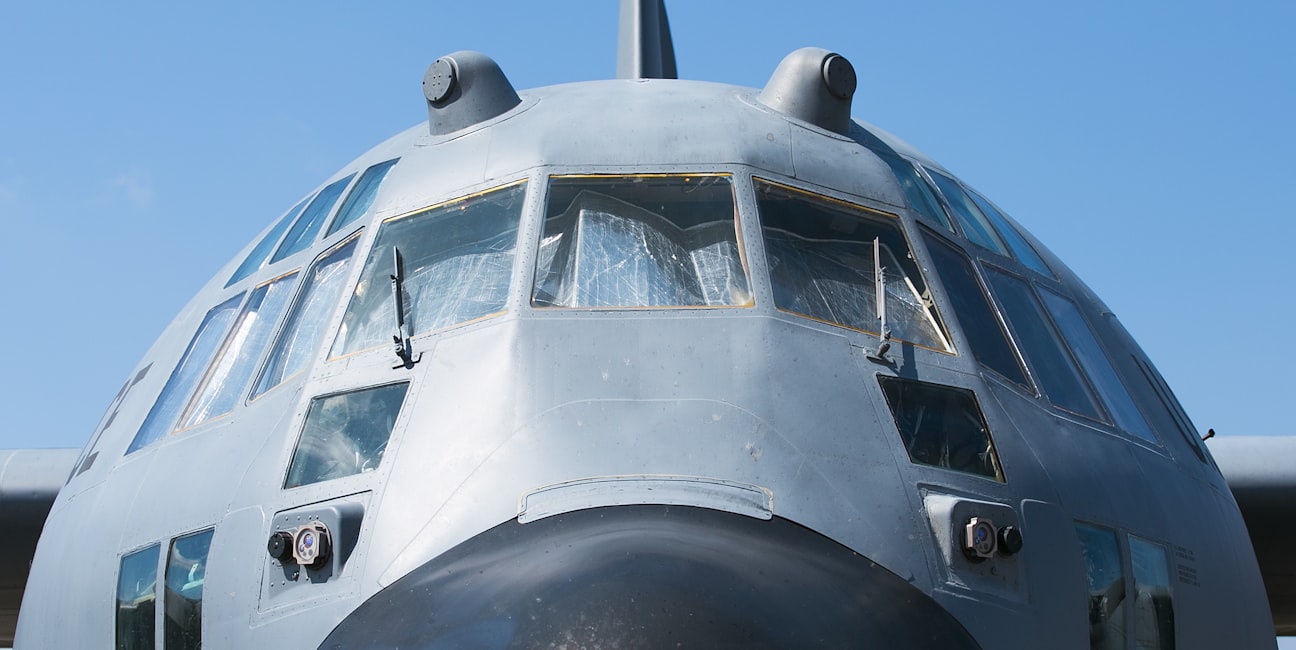
The same fragmentation creates strategic gaps. Because member states procure independently, critical enablers — long-range logistics, air-to-air refuelling, strategic lift — fall through the cracks. No single country has the budget or political rationale to invest in assets that primarily serve a collective security function, and no coordinating mechanism exists to assign the cost and the capability across the group.
The brief lays out two paths to address the problem.
The first is incremental: broaden the role of the existing European Defence Agency (EDA), possibly pairing it with a new lending instrument modelled on the EU's SURE programme — the temporary unemployment support scheme deployed during the COVID-19 pandemic that allowed the EU to borrow collectively and on-lend to member states. This approach works within existing EU treaty structures and requires no new institutions, but its authors treat it as a second-best option. The EDA's track record on joint procurement is limited, and a SURE-style instrument would provide financing but not the demand-coordination that drives down unit costs.
The second option is more ambitious: a European Defence Mechanism (EDM), created by intergovernmental treaty along the lines of the European Stability Mechanism (ESM). The EDM would be a standing institution with its own capital, a mandate for joint procurement, and the legal capacity to own strategic enablers — aircraft, logistics platforms, satellite assets — and charge member states usage fees. The ownership model is key: by holding assets collectively and charging access fees, the EDM spreads the upfront capital cost across members over time, reducing the immediate budgetary impact of rearmament.
The brief recommends the EDM option. Its intergovernmental treaty basis means it does not require EU treaty change — a major practical advantage — while its capital structure gives it genuine procurement muscle. And critically, it would prohibit both state aid and procurement preferences that benefit national contractors over equally capable firms from other EDM members. That is the provision that directly attacks the fragmentation problem.
The ESM analogy is instructive. The ESM was created in 2012 as an emergency response to the eurozone crisis, using an intergovernmental treaty signed by eurozone members — outside the EU treaty framework, but with full legal standing. It was up and running within months of political agreement. The Bruegel authors are implicitly arguing that the same urgency that justified rapid ESM creation now applies to European defence.
The practical implication is that a subset of EU member states — willing to pool procurement and commit to no national-preference rules — could move ahead without waiting for unanimity across all 27. Poland, Germany, France, the Nordic and Baltic states, and the Netherlands are the obvious founding members. Their combined defence budgets are large enough to achieve the scale effects the brief identifies.
The EDM proposal also sidesteps one of the chronic obstacles to EU defence cooperation: the legal restrictions on using EU budget funds for lethal equipment. By operating outside the EU treaty framework, an EDM could fund tanks, ammunition, and missile systems in ways the EU budget cannot.
The Bruegel paper is not the first to identify European procurement fragmentation as a cost multiplier — the European Court of Auditors, the EDA, and multiple Commission communications have made the same point for years. What it adds is a specific institutional design that could actually solve the problem, rather than a call for better coordination through existing structures that have repeatedly failed to produce it.
It also arrives at a moment when political conditions for a step-change are more favourable than at any point since European defence integration was last seriously attempted in the 1950s. Whether governments choose to move is a political question. Whether the current institutional setup, if unchanged, will deliver the capabilities that European rearmament is meant to produce is now, at least, a well-answered analytical one.
Source: Bruegel — “The governance and funding of European rearmament”, Policy Brief 15/2025