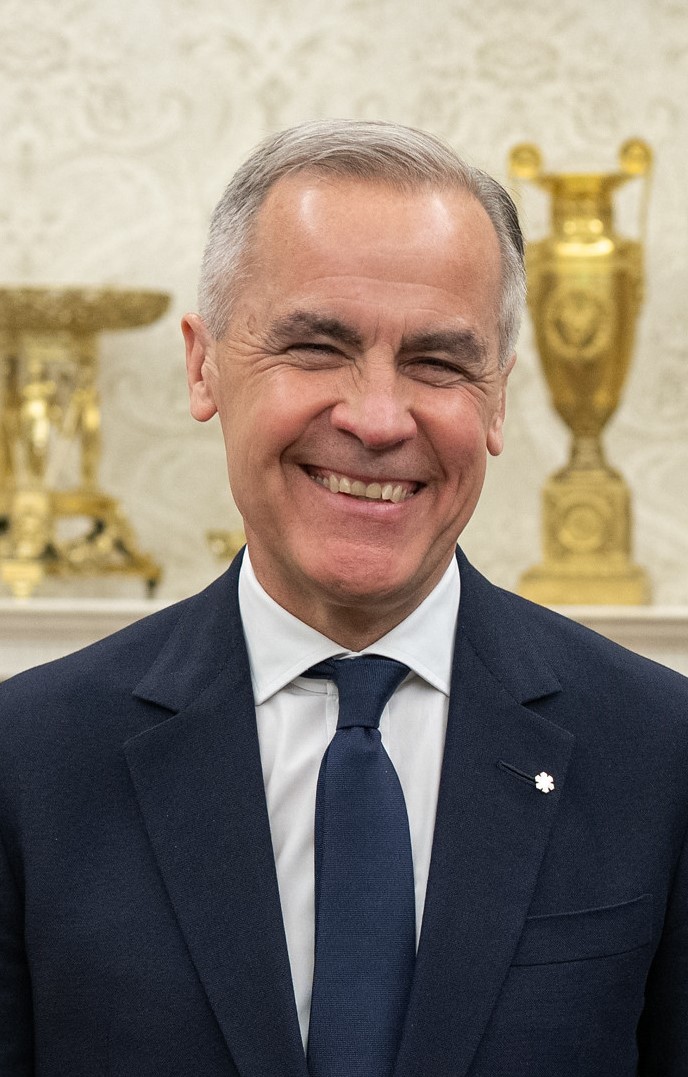
Mark Carney told Canadians at the weekend that their country was in an economic war. "You're at war when you're attacked, and we got attacked," the prime minister said, after talks with Washington collapsed and the United States imposed 50% duties on roughly $20bn of Canadian goods.
The language was strong. The instrument behind it was stranger. Washington did not reach for the emergency powers it has relied on for most of the past two years, several of which have been fought over in the American courts. It used Section 338 of the Tariff Act of 1930, a dormant clause allowing duties of up to 50% on countries found to be discriminating against US commerce. It had not been used since 1949.
The scale is modest. The 50% rate covers about 5% of the goods Canada sends south: lumber, wine, furniture, honey, hockey sticks. Ottawa's answer, effective 8 September, is meant to be equal in value and rather less quiet in effect, falling on steel, dairy, appliances, agricultural machinery, pulp and paper and electronics.
Carney's decision looks braver than it was, and that is the interesting part.
Canada had spent months preparing to concede. It was ready to live with permanent duties in some sectors rather than insist on a return to pre-2025 zero rates, and to accept tighter rules of origin pulling more of the cross-border car supply chain into the United States. Those are hard concessions to defend at home. A narrow, well-aimed American offer would have left Carney with nothing but bad options.
Instead the demands arrived late and arrived wide. Washington wanted Canada to drop requirements promoting the French language, including French-language labelling and francophone content obligations on digital platforms. It wanted exclusive access to Canadian critical minerals. And it wanted a say in which other countries Canada may sign trade agreements with.
"This is no longer about a trade deal — it is about a takeover of Canada's sovereignty and identity," Carney said.
Demands of that kind are not really about trade. They test whether a partner will accept terms that visibly reduce its own sovereignty. Signing them is cheap in the short run, because nobody expects them to be enforced, and expensive later, because agreeing establishes that you can be moved.
Which brings the story to Brussels.
In July 2025, at Turnberry in Scotland, the European Commission accepted a framework fixing a 15% ceiling on most EU goods entering the United States, including cars, car parts, pharmaceuticals and semiconductors. In the joint statement published on 21 August 2025, the EU committed to $600bn of new investment in the United States by 2028, purchases of $750bn of American energy over the same period, and at least $40bn of US AI chips. It removed its own tariffs on US industrial goods and opened selected agricultural and seafood lines.
Officials briefed at the time that the investment and energy numbers were not deliverable and would quietly lapse. That may well prove true. It is also beside the point Carney was making.
"We recognised that sometimes its signature was written in pencil," he said of the American side.
Since Turnberry, the EU has not been left alone. It has met new tariff threats and new demands, and has adjusted parts of its own regulatory agenda in ways Washington had asked for. Canada, China and Brazil retaliated instead; none of them is obviously worse off for it. Former European officials are now making the comparison out loud. Carl Bildt, the former Swedish prime minister, suggested there would be "a discreet discussion" in the EU and Japan about whether they had done the right thing. Gérard Araud, France's former ambassador in Washington, was blunter: with this administration, only firmness pays.
The one institutional voice from Brussels came from the European Parliament. Bernd Lange, the German Social Democrat who chairs its international trade committee, declared solidarity with Canada. "Trade agreements must be negotiated on an equal footing between partners, and not imposed unilaterally through pressure or blackmail by a stronger partner," he said. Lange does not run negotiations. The Commission does, under a mandate from national governments — and from the Commission, and from the capitals, there has been nothing.
The asymmetry is not subtle. Roughly three-quarters of Canada's exports go to the United States; for the EU the share is closer to a fifth. Canada has 41 million people. The EU has some 450 million and the largest single market in the world. Canada depends on the United States for its defence. The EU contains a nuclear-armed member state.
Carney also had a narrower argument, and as a former governor of two central banks he is entitled to make it. Canada's fiscal deficit is running near 2% of GDP this year; the American figure is above 6%, and long-term US borrowing costs have kept rising despite Treasury efforts to pull them down. "We are entering a phase where fiscal strength, discipline, focus is going to be very important," he said. "If you don't have your house in order, it's too late."
Read that as a claim about leverage: that American economic coercion works less well than it looks, and is getting more expensive to sustain.
Europe will find out soon enough whether it has learned anything, because its next confrontation is already scheduled — and it is not with Washington.
In June, trade commissioner Maroš Šefčovič and China's commerce minister Wang Wentao agreed four workstreams and an October deadline for tangible results on a goods trade deficit that reached roughly €360bn in 2025. Chinese cars and car parts worth about €22bn entered the EU last year while European exports in the same segment fell by around a third. Behind the deadline sit prepared measures: curbs on Chinese industrial oversupply, an Industrial Accelerator Act that would keep some Chinese goods out of public procurement and limit takeovers of European firms, and a Cybersecurity Act revision that would shut Huawei out of telecoms and solar contracts.
France is pushing. Berlin, the member state that matters most to anything aimed at China, has still not settled on a position: the chancellery is split and the economics ministry is braking. Beijing sent a paper to Brussels and Berlin this month containing no compromise offers, which is a rational reading of the situation. It also signed an agreement with Switzerland on 20 August removing almost all tariffs on Swiss exports to China, and Xi Jinping is expected in Washington within the month.
Canada's refusal will cost Canada. Carney said so himself; retaliation lands on Canadian consumers too, and 50% duties on lumber and furniture are real jobs in British Columbia and Ontario. Defiance is not automatically the right policy, and Ottawa's choice was made easier by an offer so overreaching that accepting it would have been worse.
But Europe's silence is a decision, in the same way a statement would have been. Brussels has spent a year arguing that its 2025 framework bought stability and predictability. If that is true, it costs nothing to say that a partner facing the same treatment deserves support. If it is not true — if the worry is that any word of solidarity invites the next threat — then the framework did not buy stability. It bought a habit.
The October deadline on China is where the habit gets tested in public. The Commission has the instruments, the mandate and a date it set itself. What it has not yet shown is that it will use them when a large trading partner declines to move. Canada has just demonstrated the alternative, and the results will be visible well before Europe has to choose.