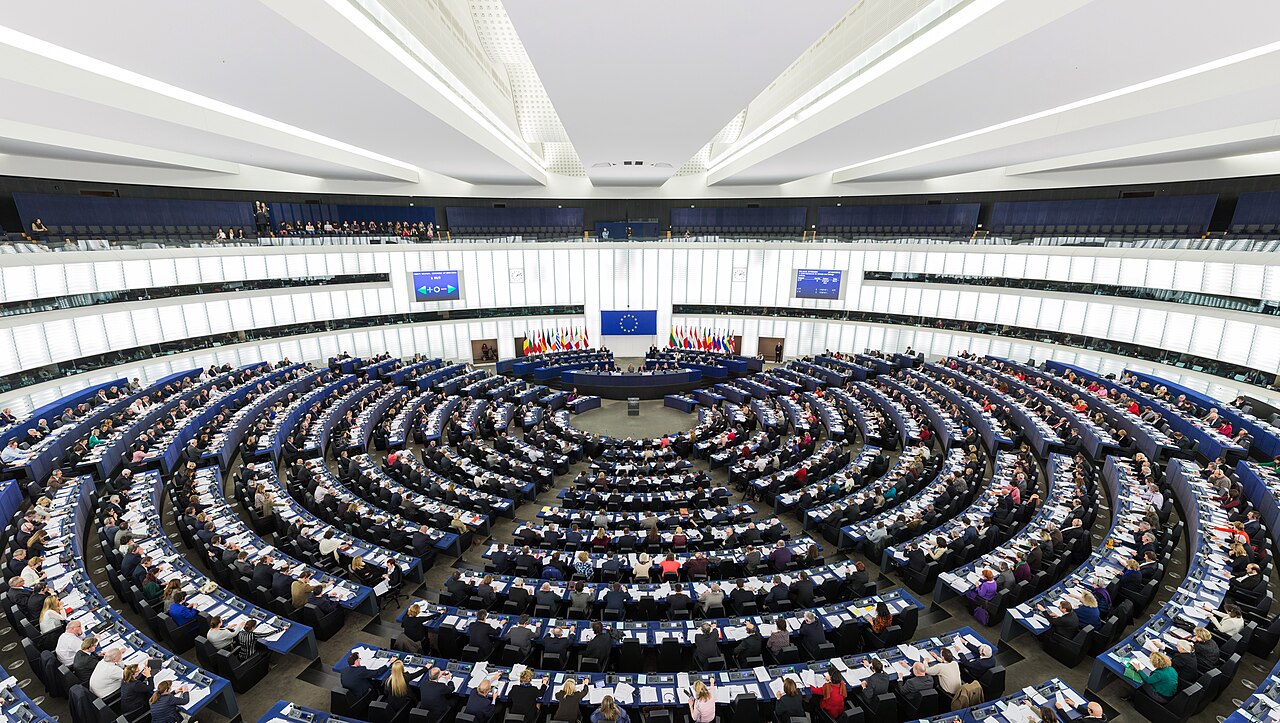
Mario Draghi's warning to the European Parliament in Strasbourg, a year ago this September, was blunt: "Europe faces a choice between paralysis, exit or integration. Exit has been tried and has not delivered... Paralysis is becoming untenable... So, integration is our only hope left." EPIC's Draghi Implementation Index, which tracks how many of the report's 383 recommendations have actually become binding EU law, now has enough data to say something about which of those three Europe is actually choosing.
Between the index's September 2025 baseline and its January 2026 interim audit, strict-plus-partial implementation rose from a standing start to 38.9% -- a jump of 7.5 percentage points in four months, as 38 ordinary-legislative-procedure acts moved through Brussels. By EPIC's July 2026 preliminary update, strict-plus-partial implementation stood at 41.3%. That is a gain of only 2.4 points over the following six months -- roughly a third of the earlier pace, even though the July count covers a longer stretch of calendar time, not a shorter one.
The July update credits 34 recommendations with some form of assessed progress between February and June 2026. The headline movers were not the report's structural centrepieces. They were a €90 billion Ukraine defence loan (Regulation 2026/467), a sustainability-reporting simplification directive (2026/470), a further phase-out of Russian gas purchases, an EU Talent Pool scheme, rail-capacity rules and flexibility written into the Water Framework Directive. Useful measures, each of them -- but none is the single market, capital markets union or "European Competitiveness Act" that EPIC's own July update flagged as the headline call still missing from the file.
The pattern is consistent with what EPIC found when it published the first-ever directorate-general ranking in July: DG Trade led all Commission departments at 41.7% strict implementation, while DG Employment sat at 0.0%. Defence-adjacent competitiveness, the sector where the EU already had the tools and the political consensus to move, jumped from 35.7% to 78.6% in the four months to January alone. Energy, by contrast, stayed near 22.9% strict-plus-partial over the same stretch -- the report's most-cited complaint about EU electricity prices running two to three times higher than in the United States and China, moving slowest of all.
Draghi's report never argued that Brussels lacked the tools to legislate quickly when it wanted to. The Ukraine loan and the defence sector prove the opposite: when a measure is urgent and politically uncontested, the EU can move from recommendation to regulation in months. What has decelerated is precisely the category Draghi warned would be hardest and most necessary -- reforms that require 27 capitals to give up something, not just agree to spend together. "If one objects to building a true Single Market, to capital market integration, and objects to debt issuance, one objects to our EU objectives," Draghi told MEPs in the same speech. A year on, EPIC's own numbers show the single market and capital-markets file are still among the weakest performers in the index, even as the total delivery count edges upward.
The Sept 2026 full Draghi review, due within days of this piece, is the first point at which the "one year on" question stops being rhetorical. A pace that fell from 7.5 to 2.4 percentage points every six months does not need to collapse to zero to matter -- it only needs to keep decelerating for the September review to arrive with less to show than the anniversary framing implies. Watch which category EPIC's next report credits with the biggest jump: another security-badged file would confirm the pattern that competitiveness only moves fast in Brussels when it can be argued as defence; a genuine single-market or capital-markets gain would be the first sign the deceleration is not structural after all.