

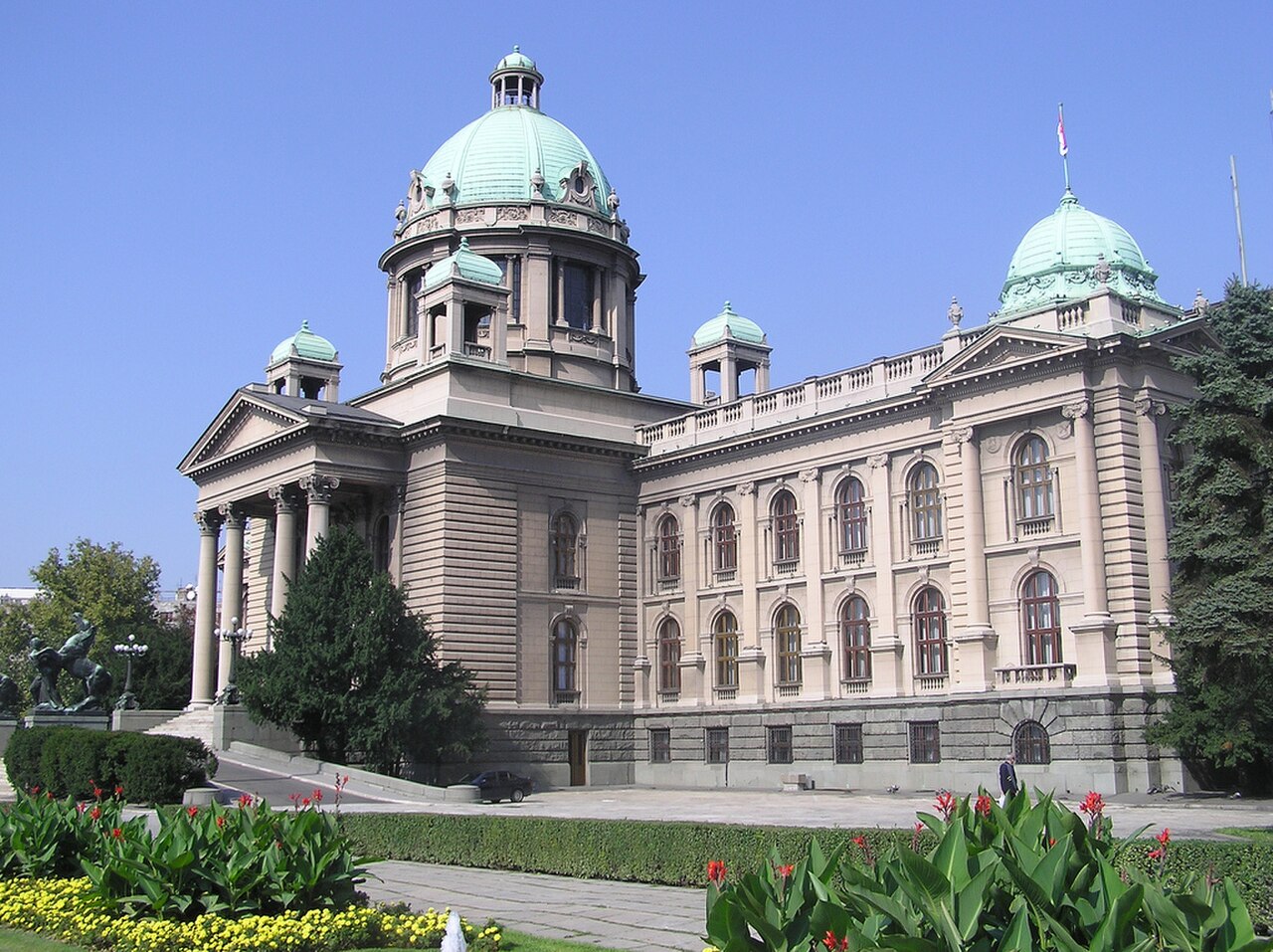
Serbia has been an EU candidate since 2012. It opened its first negotiating chapters in 2014. On the most recent reading of EPIC's Integration Readiness Index, published in June 2026, it scores 5.5 out of 10 for 2025 — the same as North Macedonia, and behind Moldova at 5.87 and Ukraine at 5.85.
Both of those countries applied for membership in 2022, in the weeks after Russia's full-scale invasion. In three years they have passed a candidate that has been in the queue for fourteen.
The Integration Readiness Index is a study paper from EPIC's Enlargement Observatory, co-published with the Friedrich Naumann Foundation and written by Antonios Nestoras, Emil Kirjas and Bernada Cunj. It scores ten candidate countries from 0 to 10 across the years 2021 to 2025, and it takes its raw material exclusively from European Commission progress reports — which matters, because it means the index cannot be accused of applying a standard the Commission does not already apply itself.
Five indicators feed the score: State of Play, Annual Progress, Recommendation Delivery, Chapter Status and Accession Momentum. The benchmark is Croatia in 2011, the last country to reach the finish line. The question the index asks is not "is this country improving?" but "how far is it from where Croatia stood when it finished?"
The 2025 field runs Montenegro 6.8, Albania 6.7, Moldova 5.87, Ukraine 5.85, Serbia 5.5, North Macedonia 5.5, Kosovo 3.61, Georgia 3.26, Bosnia and Herzegovina 2.91, Türkiye 2.81.
Read that list as a queue and the Western Balkans story becomes uncomfortable. Montenegro and Albania lead, and both have moved with visible urgency in the past two years. Serbia and North Macedonia sit in the middle, overtaken by two applicants with a war and an energy crisis to manage. Bosnia has gone backwards sharply, from 4.14 in 2024 to 2.91 in 2025. Türkiye is less ready in 2025 (2.81) than it was in 2021 (3.25) — the only candidate moving away from the door it is standing at.
A middling score after fourteen years is not a technical problem. Serbia has the administrative capacity, the negotiating structures and the economic weight that several higher-scoring candidates lack. What it has not delivered is the part of the accession process that cannot be written into a chapter.
Last week made the point better than any indicator could. Enlargement Commissioner Marta Kos cancelled a planned trip to Serbia — including her participation in the BELTALKS economic forum — over what she called the glorification of Ratko Mladić, who died on 27 August while serving a life sentence in The Hague for genocide, crimes against humanity and war crimes. "That path requires confronting the past, genuine reconciliation and respecting the victims of war crimes," she wrote. President Aleksandar Vučić called her explanation "very short but stupid", skipped the memorial, and was absent from Monday's funeral in a Belgrade suburb, which went ahead without the state and military honours originally planned.
Recommendation Delivery is one of the five indicators. It is hard to score well on it while the Commission is publicly explaining why it will not visit.
The most useful thing the index does is refuse to grade on a curve. Measured against Croatia in 2011, no current candidate is close. The front-runners sit at roughly two-thirds of the finish line; the median candidate is at half; three are below 3.5.
That is a problem for the EU as much as for the candidates. Enlargement is the bloc's most effective foreign policy instrument, and it works by holding out a credible finish line. An index built from the Commission's own reports says the line is a long way off for almost everyone in the queue — including the country that has been waiting longest.
Serbia's score is not a verdict on paperwork. It is a measure of how much of the accession process is political, and how little of that part has moved since 2012.
The EU has spent this year arguing about whether enlargement can be accelerated for Ukraine and Moldova without unravelling the merit-based system. EPIC's numbers suggest the awkward answer: on the Commission's own reporting, those two are already ahead of Serbia. The question is no longer whether accelerating them would be unfair to the Western Balkans. It is what the Western Balkans has been doing with fourteen years of head start.


