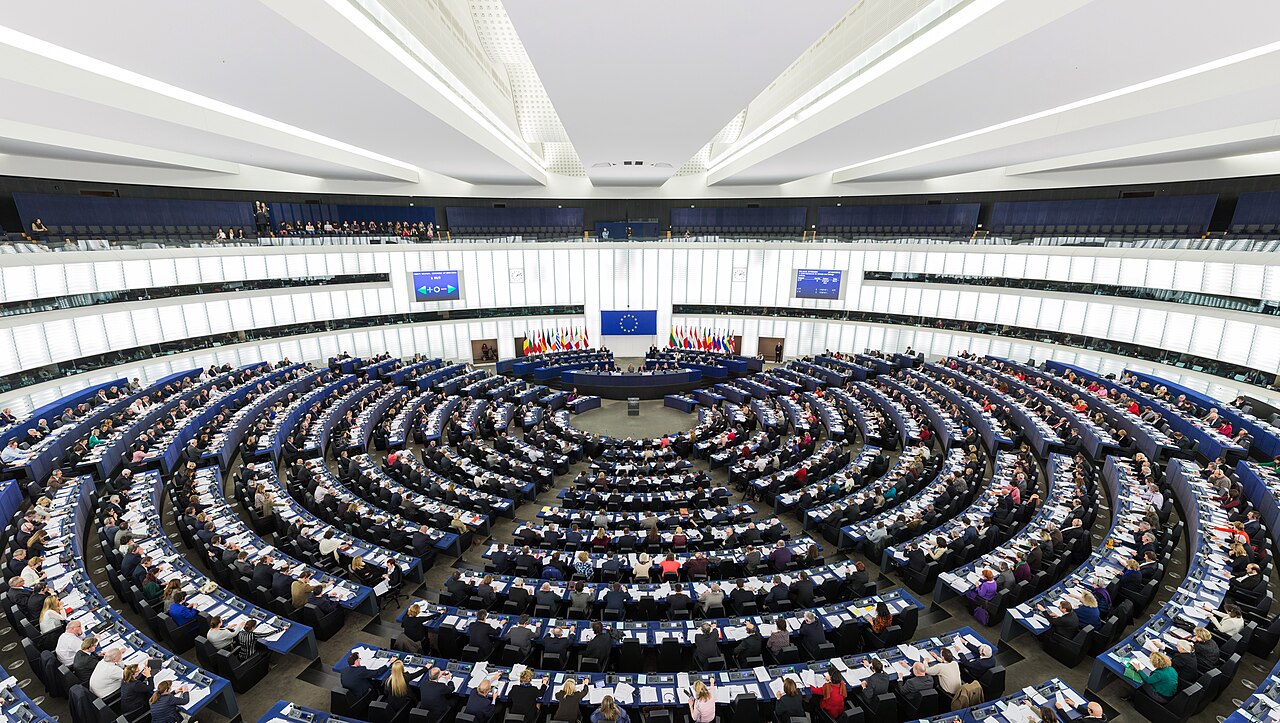
The centre-right in the European Parliament wants to kill the law that was meant to give Europe's industrial policy some teeth.
In an amendment circulating in Parliament, 24 MEPs from the European People's Party, mostly from Germany, ask their colleagues to scrap the Industrial Accelerator Act. It is the Commission's flagship "Made in Europe" proposal, and France has championed it as the answer to Europe's industrial woes.
The act would set local-content and low-carbon requirements for public procurement and subsidies in a handful of key manufacturing sectors. In plain terms, when governments spend taxpayers' money on steel, cars or batteries, they would have to favour products made in Europe and made cleanly.
Part of the objection is drafting. The text contains more than 40 places where the Commission is asked to adopt new standards or amend existing rules later. That leaves key elements to be decided after MEPs have voted, and parliamentary sources say it makes the law's real effect hard to judge today. One EPP official described the bill as "a bull in a china shop".
The timing is awkward. The amendment landed in the same week Berlin and Paris agreed to push for tougher EU action against China. The two governments want a trade tool that could, if needed, shut Chinese firms out of the single market. The EPP wants to kill the other half of the industrial toolbox.
Three Parliament committees and 27 negotiators are handling the bill, and it has attracted 5,070 amendments. Committee votes are scheduled for early December, followed by a plenary vote on 14 December. The sheer volume of amendments could force that timetable to change. A bill that critics already call unfinished may simply run out of road.
The act has an outside audience too. British Prime Minister Andy Burnham was in Berlin on Thursday, his first trip to an EU capital since taking office in July, to meet Chancellor Friedrich Merz. Downing Street said the talks were mainly about defence and security. Officials in London confirmed that industrial policy was also on the agenda.
Burnham warned last month that Britain risked "collateral damage" from Brussels' efforts to shield European industry from Chinese competition, including harm to cross-Channel supply chains. Germany has long pushed to include the UK in EU programmes. It favours a broad "trade partner" approach under the new rules. Paris argues such schemes should be kept for member states.
This is the first sign that the Franco-German agreement on China does not extend to industrial policy at home. Berlin will tolerate a harder line on Chinese imports. Many German conservatives are far less keen on rules that tell European buyers what to buy.
The law is unlikely to die in October. It is more likely to be bent out of shape over the next two months: narrowed, delayed or stripped of the local-content teeth that made it attractive in Paris. Watch the committee vote in December, and watch whether Merz defends the act or leaves his MEPs to dismantle it.