When we last looked at the 21st package, in July, it was stuck. A handful of capitals were each holding out over narrow national interests, the oil price cap was frozen at $44.10 a barrel on a deadline of 23 July, and everything hung on one meeting of EU ambassadors before the summer recess. It went to the wire and then it passed. The Council adopted the package on 23 July; the measures entered into force on 24 July.
A month on, it is worth reading what actually landed, because the shape of the compromise says more about EU sanctions policy than the headline number of listings does.
The oil price cap was the sticking point, and the resolution was to stop the clock. The package pauses the automatic adjustment of the cap mechanism until 15 July 2027, with an interim review to check the suspension remains necessary and proportionate. The Council's stated reason is the exceptional market situation created by the closure of the Strait of Hormuz.
That is a significant admission. The cap was designed to float with the market so that Russia's realised price stayed suppressed as conditions changed. Under war-driven oil prices, the formula would have pushed the ceiling upward, above where Russian barrels actually trade, and the instrument would have stopped biting. Rather than fight over a new figure — the argument that had deadlocked ambassadors — member states agreed to leave the number where it is and revisit it in a year. The EU did not win the argument about the cap. It postponed it.
The rest of the package is unusually broad. On finance, asset freezes hit 94 banks and major financial institutions, with the transaction ban extended to 33 further Russian credit and financial institutions, plus a Kyrgyz bank connected to Russia's SPFS messaging system and three other non-Russian banks accused of circumvention. Fourteen crypto service platforms based in Georgia, Panama, the United Arab Emirates, the Marshall Islands, Kyrgyzstan and Belarus were added.
The genuinely new instrument sits underneath that: for the first time the EU has given itself the power to impose a full third-country ban on crypto-asset services, allowing it to prohibit any transaction between an EU operator and any crypto provider used by Russia in a given jurisdiction. It is a deterrent aimed less at individual platforms than at the countries that host them.
On energy, 41 more shadow-fleet vessels were listed, on top of 632 already sanctioned, and the rules were widened to catch vessels that service the fleet through bunkering and similar support — including, for the first time, a crewing agency. Eighteen entities and one individual were designated in the oil sector, among them three refineries in Russia and a major Belarusian refinery. Here too there is a structural addition: the package creates the power to prohibit transactions with listed refineries in third countries that process Russian crude, and applies it first to a refinery at Kulevi in Georgia, with a six-month lead-in.
On the military-industrial side, 56 listings target Russia's defence complex, 37 of them tied directly to long-range drone production and supply. A further 51 entities were added to the dual-use export-restriction list, including firms in China and Hong Kong, India, Kazakhstan, Kyrgyzstan, Türkiye and the United Arab Emirates. The package also lays the legal basis for a visa ban on Russian combatants and ex-combatants, though the Council has not yet decided when it takes effect.
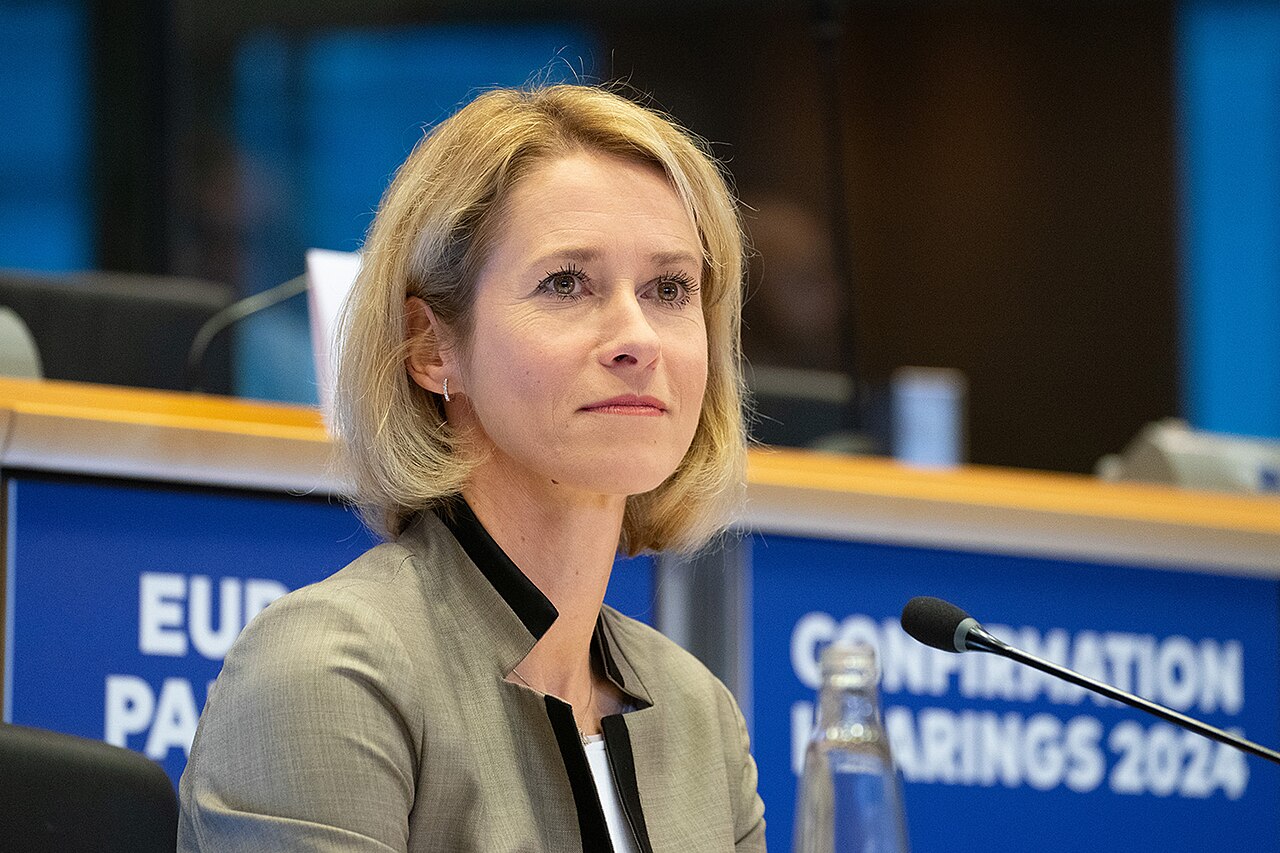
Kaja Kallas, the EU's High Representative and chair of the Foreign Affairs Council, summarised the logic plainly: “With each round of sanctions, we squeeze Russia's economy and its capacity to prolong its illegal war.”
Two additions will matter to European companies more than to Moscow. The EU has expanded its export bans to cover nickel and beryllium powders, corrosion-resistant coating alloys used in jet engines, self-adhesive films used in aerospace and defence, and drone-specific aviation items including ground support equipment, jamming and interception systems, launch systems and flight-termination systems. It has also added import bans on goods worth more than €60 million a year — copper, nickel, lead and precious-metal ores, unwrought zinc, alkaline-earth metals, zinc and chromium oxides, glassware, imitation pearls and car parts.
And, in a provision aimed squarely at a growing legal problem, EU courts and member states may now refuse to recognise or enforce judgments obtained through proceedings brought in Russian courts against EU operators complying with sanctions. Belarus gets a mirrored set of trade measures and the same legal protection regime.
Twenty-one packages in, the EU's sanctions machine is still producing volume — and the July round is the heaviest single batch of listings since the full-scale invasion began. But the way the deadlock broke is the tell. Unanimity means the bloc can nearly always agree to add names to a list, and can almost never agree to change a formula. Faced with a mechanism that had stopped working, member states did not repair it; they suspended it for a year and scheduled a review. Work on a 22nd package is under way and nothing has been adopted. When it comes, watch whether the oil price cap comes back onto the table before July 2027 — and whether the two new third-country instruments, on crypto and on refineries, are ever actually used. Those are the measures that would signal the EU is willing to impose costs beyond Russia's borders, which is where the circumvention now lives.