

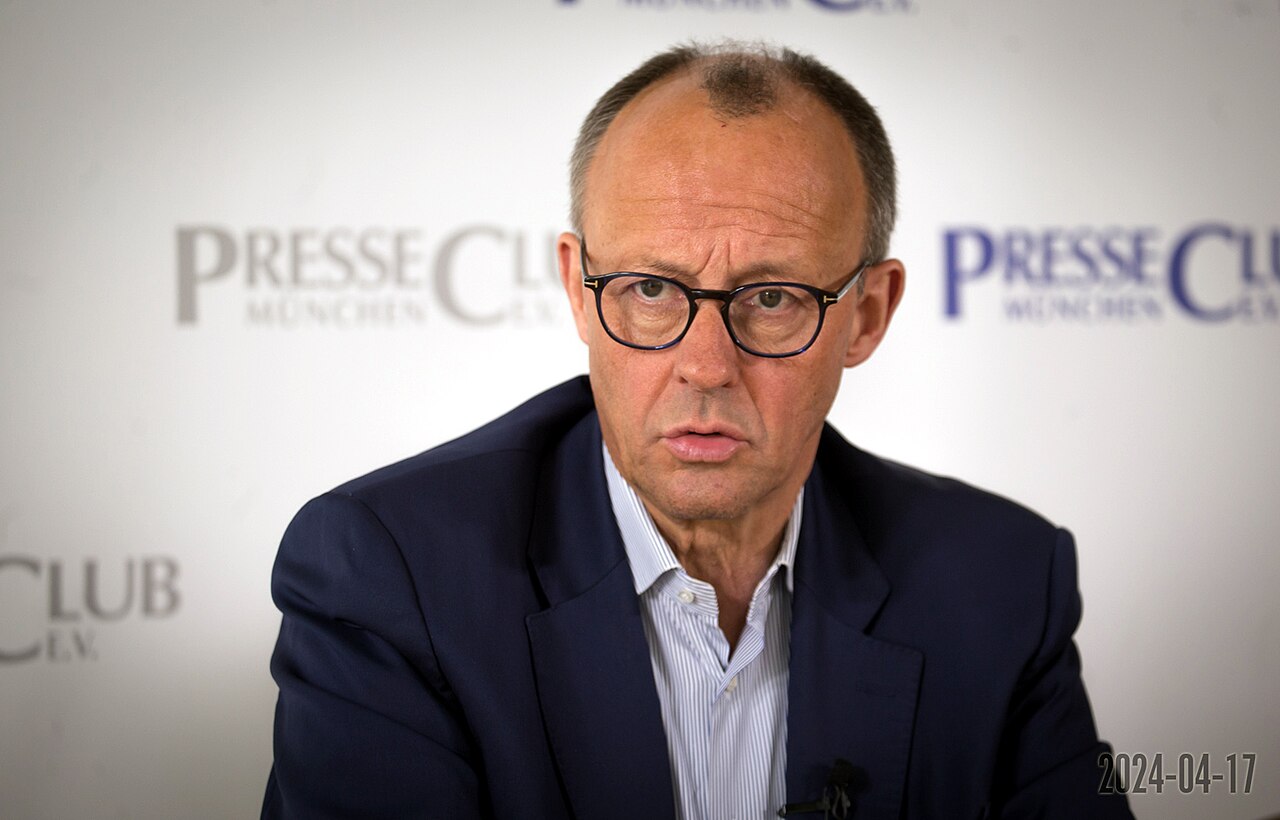
Friedrich Merz hosted a lunch in Berlin on Thursday for the leaders of Austria, Denmark, Finland, the Netherlands and Sweden. The subject was the European Union's next seven-year budget. The purpose was coordination, and the timing was not accidental: the fight over the 2028 to 2034 framework has now started in earnest, and these are the countries that pay more into the EU than they take out.
The Commission has proposed a pot of roughly €2 trillion. The net contributors want it cut, and they want what survives moved — towards competitiveness and defence, and away from the two headings that have historically absorbed most EU spending, agriculture and cohesion. Merz set out the position in Dublin last month. "These cuts are essential," he said, adding that he trusted his Irish counterpart Micheal Martin to "put forward a realistic proposal."
National budgets are the reason. Fiscal positions across the EU have been deteriorating for two years, and the pressure has moved from the periphery to the core. Investors now identify France, not Italy, as the main focus of concern about European debt sustainability, citing the budget and the 2027 presidential election. A chancellor facing that backdrop has limited appetite for writing a larger cheque to Brussels, and neither do the five governments he invited.
The venue matters as much as the guest list. The frugal caucus has traditionally been led from The Hague or Vienna, with Germany positioned as the reluctant paymaster that eventually splits the difference. Merz convening the group in Berlin removes that ambiguity. The largest net contributor is no longer the swing vote in this negotiation; it is chairing the opposition.
European Council President Antonio Costa is working the other side of the equation. Rather than fight over the size of the pot, he is pressing leaders to agree on new EU-wide revenue sources — projected to raise around €66bn a year — which would fund the budget without proportionally larger national contributions. He is touring capitals to sound out where leaders stand, meeting Czech Prime Minister Andrej Babis in Prague on Thursday, and wants a deal before the end of the year.
That is a coherent answer to the frugals' problem, and it has an obvious flaw: own resources have to be agreed unanimously, and the governments most anxious about their contributions are frequently the same ones most resistant to giving Brussels an independent tax base. Costa is offering to solve the affordability question by conceding a point on sovereignty that this particular group of capitals has spent two decades refusing to concede.
Sitting behind all of it is Ukraine. On the same day the frugals met, four large member states wrote to the Commission demanding that the debate on using frozen Russian assets to fund Ukraine be reopened, and asking for fresh work on the proposal. That is not a coincidence of the calendar. If the frozen assets cannot be mobilised, Ukraine's financing has to come from somewhere in the budget the frugals are trying to shrink — or from national contributions they have just travelled to Berlin to resist.
Meanwhile Ursula von der Leyen spent Thursday in Paris making the spending case from the other direction. "Our ambition is clear: to make Europe a continent that produces, invests and protects," she was expected to tell an audience of executives, according to prepared remarks. "Europe has the industry. It has the researchers. It has the data. Now it must turn them into an economic advantage." Turning them into an economic advantage costs money, and the Commission's proposal is the number she has put on it.
The 2028 to 2034 framework is where the competitiveness agenda stops being rhetorical. Every institution in Brussels now agrees the EU underinvests in defence, energy and technology. The Berlin lunch is a reminder that agreeing on the diagnosis has never been the constraint.
Watch what happens to cohesion and agriculture in the Irish presidency's October text. Those two headings are where the money actually is, they have the most organised constituencies in European politics, and the frugals have just made clear in public that this is where they intend to find their cuts. If the compromise protects both and trims elsewhere, the competitiveness pivot will have been priced at close to nothing — and the next Draghi-style report will be written about why the last one changed so little.


