_31.jpeg)
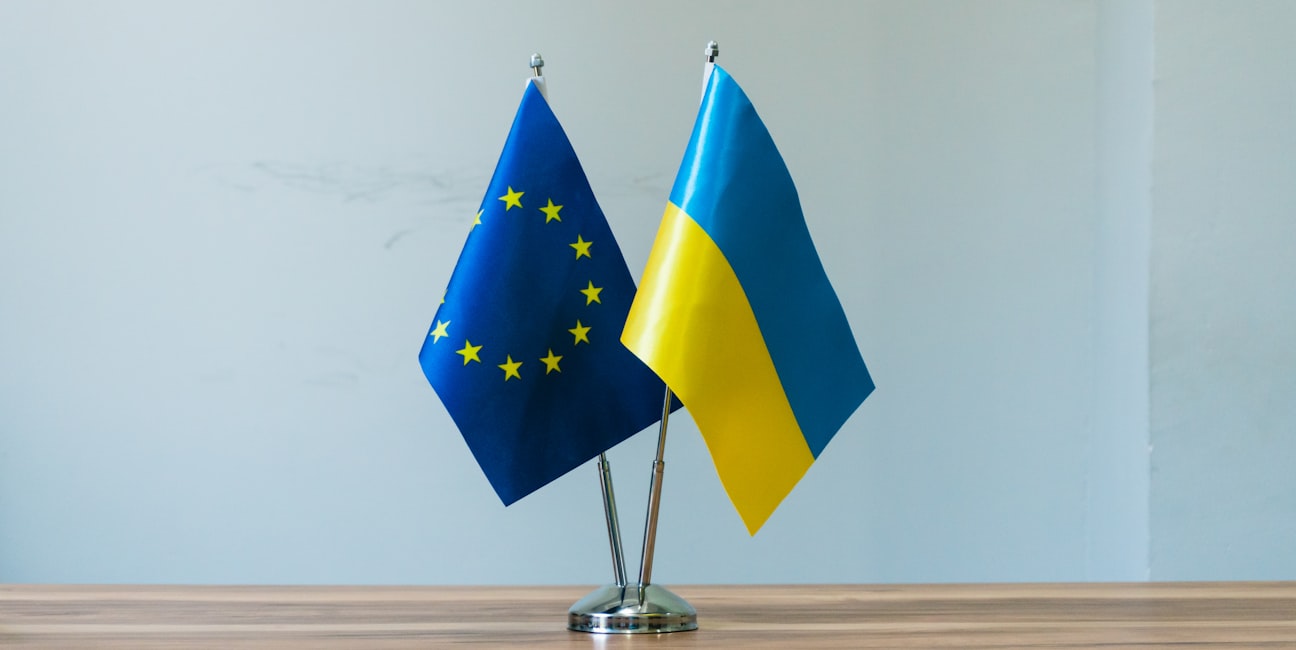
Four countries hoping to join the European Union took real, procedural steps forward on Tuesday. In Brussels, officials convened intergovernmental conferences to open or formally close negotiating chapters for Albania, Montenegro, Moldova and Ukraine — all on the same day. Enlargement Commissioner Marta Kos summed up the scale of it: "We have not seen this in more than two decades. The last time, it was in 2002. This is a Super Tuesday for EU enlargement, and Ukraine is part of it."
Accession talks move in stages, grouped into negotiating "clusters" that bundle related policy chapters. Opening or closing a cluster doesn't grant membership — it signals that a candidate has met, or is being allowed to start working toward, a defined set of legal and institutional benchmarks. Getting four countries through that gate in a single sitting is rare precisely because unanimity among all 27 member states is required at each step.
Ukraine applied for EU membership in February 2022, four days after Russia's full-scale invasion began. That a country at war has since become one of the accession process's fastest movers says as much about EU politics as about Kyiv's reform record. On Tuesday, Ukraine and Moldova each opened a second negotiating cluster, covering foreign, security and defence policy alongside trade, development and humanitarian cooperation — chapters that go to the heart of how closely a future member state would align with EU foreign policy.
None of this guarantees Ukraine will join soon, or at all. Accession has historically taken candidate countries a decade or more, and every remaining chapter still needs unanimous sign-off from current members.
For most of the past two years, the biggest obstacle to Ukraine's progress wasn't Kyiv's readiness — it was Budapest. Viktor Orbán, then Hungary's prime minister and widely seen as Russia's closest ally inside the EU, used Hungary's veto power to repeatedly stall the file. A change of government in Hungary has removed that blockage, freeing up a backlog of procedural steps that had been waiting for over a year.
Tuesday's flurry of paperwork is a genuine milestone, but it's worth being precise about what it does and doesn't signal. It shows that enlargement, long treated as a slow-moving and largely symbolic EU ambition, now has real institutional momentum — helped along by the war in Ukraine, which gives the bloc a strategic reason to move faster than usual. But every later stage of accession still needs unanimous approval, and a single future veto — from Hungary or anyone else — could stall the process again. For candidate countries and their citizens, Tuesday buys credibility, not a firm date.