

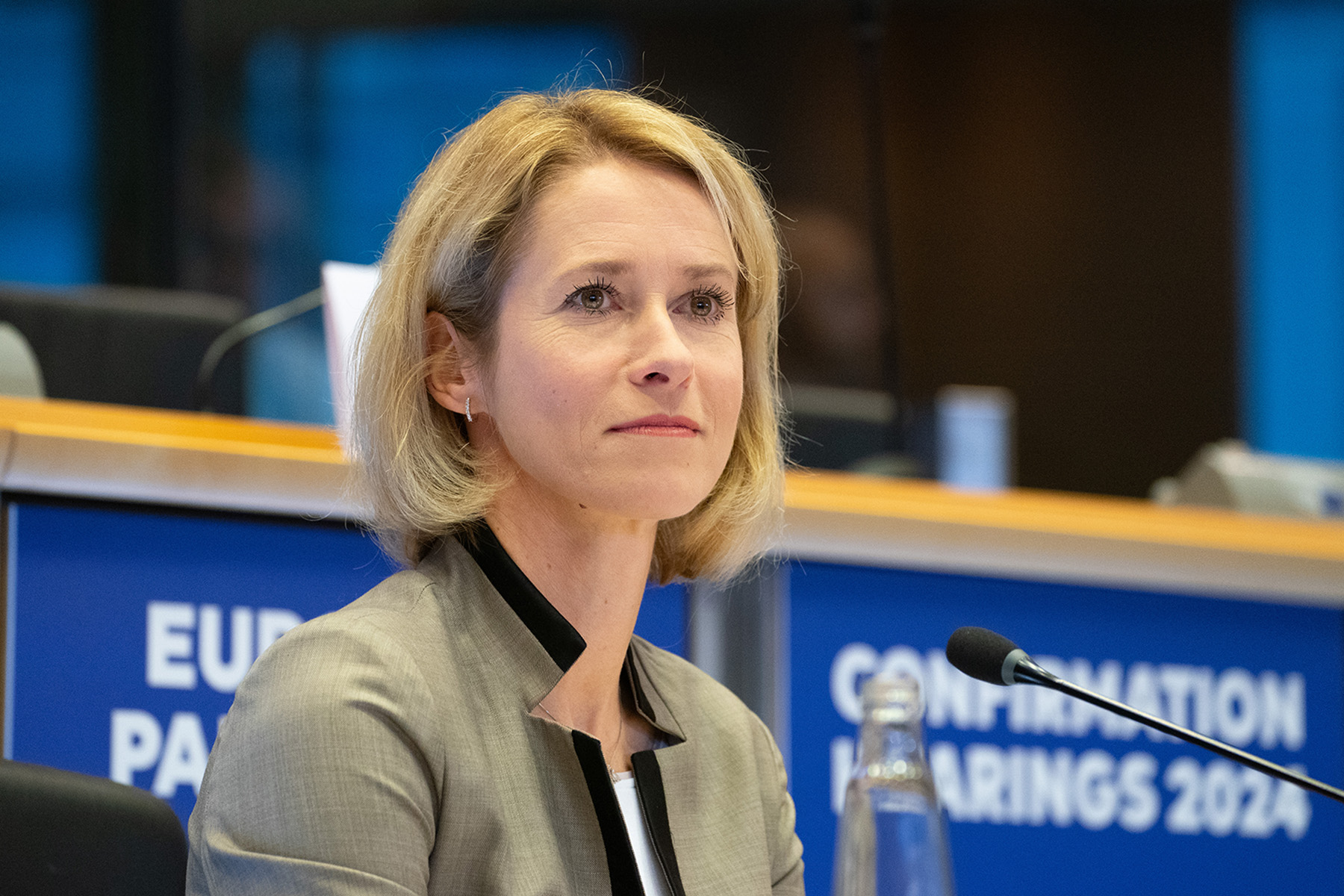
Kajsa Ollongren took over as secretary general of the European External Action Service on Monday. On the same day, eleven member states and a Franco-German working paper put two separate proposals on the table for shrinking the service she now runs, or for constraining the woman who runs it above her.
EU foreign ministers meet informally in Wicklow, Ireland, on Tuesday, in the format Brussels calls a Gymnich — the setting where ministers talk without taking decisions. Two documents will shape that conversation. Neither is a formal proposal. Both are attempts to answer the same complaint: that the European Union takes too long to say anything about the world, and then says it too quietly.
The first document is a letter to Kaja Kallas, the High Representative, signed by Austria, Belgium, Denmark, Finland, France, Germany, Luxembourg, the Netherlands, Romania, Spain and Sweden. It sets out five ways to make decisions under the Common Foreign and Security Policy faster and harder to obstruct.
The headline item is wider use of qualified majority voting in place of unanimity. The others are less familiar and, in some ways, more interesting. The signatories want the treaty principle of sincere cooperation given real weight, meaning governments should honour commitments they have made to one another even where those commitments are not strictly legally binding. They want the High Representative to explore what the treaties already permit — which in practice means the passerelle clause, the provision that lets the European Council move specific foreign policy decisions to majority voting without amending the treaties. And they want any country invoking its veto to state, in the terms the treaty itself uses, the vital reasons of national policy that justify it.
That last one is the quiet radical. Under the current arrangement, a government blocking a sanctions package or a statement on China is under no obligation to explain itself in any detail. Requiring a reason on the record does not remove the veto. It makes using it expensive.
Germany has pressed this argument for years. What is new is the company it is keeping. Unanimity has always been defended as the small state's insurance policy, and yet Austria, Denmark, Finland, Luxembourg and Romania have signed a letter proposing to give some of it away. That is a genuine shift, and it is the most substantive thing in the document.
The other document is Franco-German and considerably shorter — a single page, according to officials who have seen it. It proposes bringing the bulk of the competences currently held by the External Action Service under the control of the European Commission, with a large part of the service's staff folded into a new Commission department for external relations.
The High Representative would be compensated in kind. One option under discussion would make Kallas an executive vice-president of the Commission, with oversight of the Commission units that run trade, development assistance and defence industrial policy. Competences attached to the Common Security and Defence Policy — peacekeeping missions, the EU military staff — would stay outside the Commission's structures.
The stated case is coherence. The External Action Service, created under the Lisbon Treaty, reports simultaneously to the Commission and to twenty-seven governments, and has spent fifteen years being blamed by both for the consequences of that arrangement. Its defenders answer that a diplomatic service accountable to the member states collectively is the only structure capable of carrying a genuinely common position, and that absorbing it into the Commission turns foreign policy into one more Brussels portfolio.
There is a precedent for the direction of travel. Ursula von der Leyen has already moved a large part of the EU's Middle East policymaking out of the service and into the Commission by creating a dedicated directorate-general for the Middle East and North Africa. Officials close to Kallas have described the current proposals in similar terms — as a power grab dressed as efficiency, or as a campaign against one High Representative rather than against a structure.
They have a point about the incentives. Whatever any reform does to the organisational map, it would leave the Commission president with tighter control over the EU's foreign policy chief than she has today. It would be difficult to design a version that did not.
Here is the arithmetic both documents run into.
Eleven signatures out of twenty-seven is not a majority, and the governments whose vetoes are the reason the letter exists are not among the signatories. Hungary and Slovakia have blocked or delayed EU positions on Russia, Ukraine and Israel. Neither signed. Italy, Poland, Greece, Czechia, Portugal and Ireland did not sign either, for a range of reasons that have nothing in common except the result.
And the passerelle route, the one the letter points towards, requires the European Council to act unanimously. A decision to stop requiring unanimity must itself be taken unanimously. Any government that suspects it might one day want to block something has an obvious interest in blocking this first. That is not a drafting flaw. It is the design. The treaties made the exit from unanimity exactly as hard as unanimity.
Which leaves the softer items in the letter carrying most of the practical weight. Sincere cooperation and a duty to explain a veto need no treaty change at all. They need a political convention that member states are willing to hold each other to — a lower legal bar and a considerably higher political one.
The argument for keeping unanimity is not purely obstructionist, and it deserves stating plainly. Foreign policy is the field where the Union has the least democratic accountability of its own. There is no European foreign minister anyone elected, and the European Parliament's role is consultative. A national veto is, among other things, the mechanism by which a national parliament's view survives contact with Brussels. Removing it moves decisions about sanctions, recognition and the use of force from an elected national government to a qualified majority assembled in a room that voters cannot turn out.
Smaller states also make a point that is hard to dismiss. Under qualified majority voting, a coalition of the four or five largest member states comes close to carrying decisions on its own. A letter co-signed by France and Germany asking everyone to surrender the veto reads differently in Ljubljana than it does in Berlin, and the presence of five smaller signatories does not make that concern illegitimate.
The two documents are usually described as parts of a single reform push. They are closer to competing diagnoses. The letter says European foreign policy fails because any one government can stop it. The Franco-German paper says it fails because the machinery is spread across too many buildings. The first is a problem of political will; the second is a problem of organisation — and only the second can be solved without asking anybody to give something up.
That asymmetry probably decides the outcome. Restructuring the External Action Service requires the agreement of institutions. Abolishing the veto requires the agreement of the governments that hold it. One of those is achievable this autumn, when leaders return to the question at their October summit. The other has been achievable in principle since 2009 and has not happened once.
The likeliest result is therefore a reorganised diplomatic service, a High Representative with a larger Commission portfolio and less independence, and a veto that survives intact — a reform that changes who runs European foreign policy without changing what stops it.



.jpeg)


