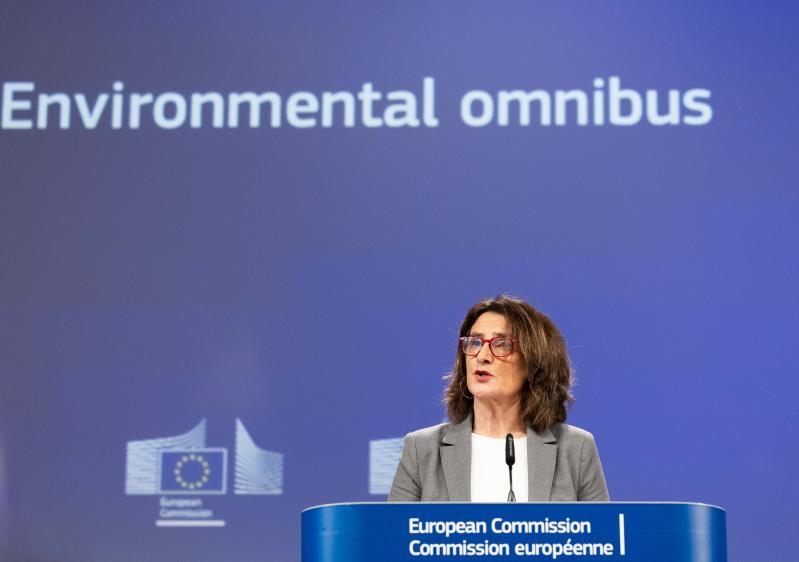
The European Commission published its revised Horizontal and Non-Horizontal Merger Guidelines on 30 April 2026 — the first comprehensive update since the original guidelines were introduced in 2004. The overhaul, led by Competition Commissioner Teresa Ribera, rewrites the conceptual framework that Brussels uses when deciding whether to approve, condition, or block large corporate mergers.
The timing is deliberate. The guidelines land as European industry faces an uncomfortable reality: its largest companies are small by global standards, and the rules that kept them that way were designed for a world that no longer exists. The old framework was built primarily around consumer protection — the idea that blocking mergers keeps prices low. The new one adds a second dimension: that Europe sometimes needs bigger, stronger companies to compete internationally.
The most consequential change is the formal elevation of efficiency arguments. Under the previous guidelines, companies could theoretically argue that a merger would generate enough synergies to offset harm to competition. In practice, this defence almost never worked. The new guidelines give it more weight, particularly where mergers create scale that benefits investment in research and development, supply chain resilience, or strategic technologies.
The guidelines also introduce clearer protections for innovative acquisitions. Brussels has been under pressure to stop blocking deals where one company acquires another primarily for its intellectual property, early-stage technology, or pipeline products — so-called killer acquisitions. The new text refines the analysis to distinguish genuine innovation bets from acquisitions designed purely to neutralise competitive threats.
Perhaps the most politically significant change is the explicit recognition of defence and critical raw materials as sectors where consolidation may serve the public interest. Companies seeking to merge in these areas will face a more sympathetic analysis — a direct response to Europe’s push to reduce dependence on non-European suppliers and build sovereign defence capacity.
The guidelines stop short of endorsing a blanket European champions policy — the contested idea of deliberately creating national or continental industry leaders by relaxing merger control. But they move the framework meaningfully in that direction. The efficiency and strategic interest provisions give the Commission discretion to approve consolidation in sectors it identifies as strategically important, without needing to formally declare a new policy.
Critics have already flagged the risks. Larger companies in concentrated markets do not automatically pass savings to consumers, and the history of European champions — in telecoms, banking, and energy — is mixed at best. Monitoring whether approved mergers actually deliver the promised efficiencies will require enforcement capacity that the Commission has not historically shown.
For the first time in two decades, EU competition law has a formal mechanism to weigh Europe’s industrial ambitions against the traditional consumer welfare standard. That is a significant shift in philosophy, even if the legal framework looks similar on the surface. The test will come in the first contested merger — probably in defence or critical minerals — where the Commission invokes the new guidelines to approve a deal it would have blocked under the old ones. That case will define how far this revision actually goes.