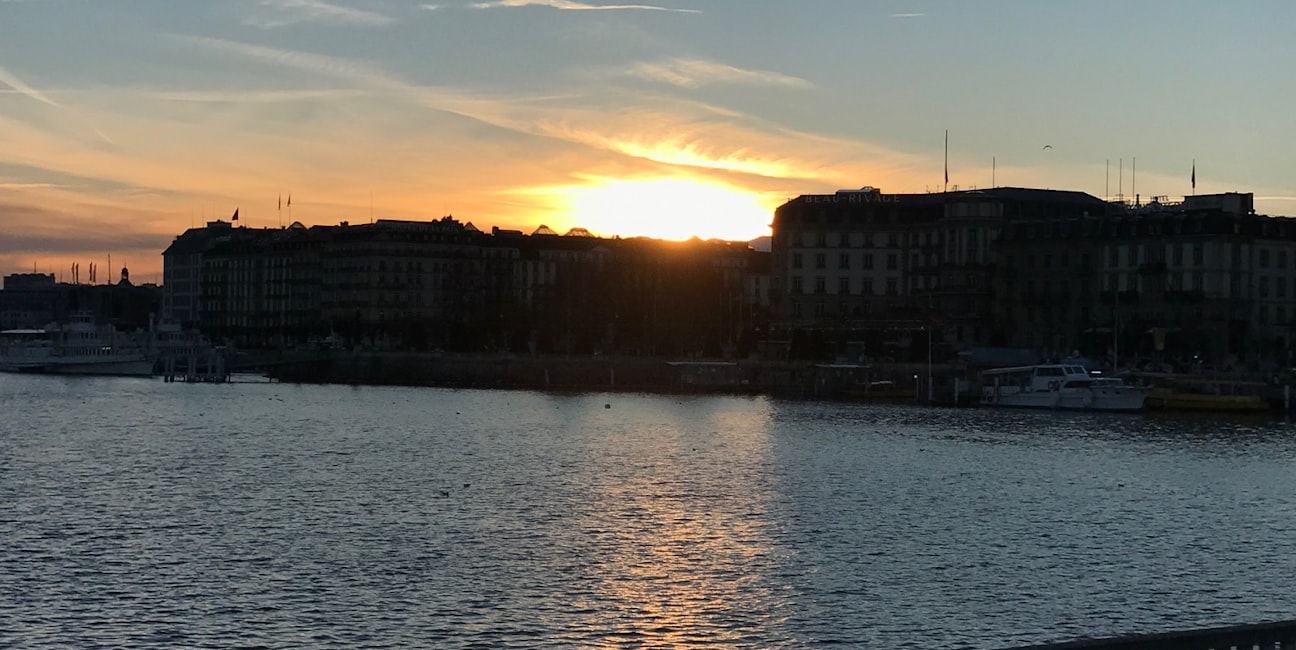
The leaders of the world's wealthiest democracies gathered on the shores of Lake Geneva this week with an unexpected centrepiece: a deal, struck by Donald Trump, to end the US war with Iran and reopen the Strait of Hormuz.
Trump arrived in France having just announced a framework agreement that he says ends the US war with Iran. It provides for the immediate reopening of the Strait of Hormuz and the lifting of the US naval blockade on Iranian ports, though officials warned traffic will take weeks to return to pre-war levels. Around a fifth of the world's oil passes through the strait.
European leaders welcomed it. President Emmanuel Macron, hosting his final G7, called the pact a “very important step for peace” and said the summit's task would be “to see the consequences of this agreement, support for Lebanon, the lasting reopening of Hormuz and of course the concluding of an accord on nuclear and ballistic activities in Iran.” Von der Leyen also welcomed the agreement.
No bloc is more exposed to the price of oil flowing through Hormuz than energy-importing Europe. The conflict's spike in crude had already fed into inflation and pushed the European Central Bank to raise interest rates for the first time since 2023. A durable reopening of the strait promises to reverse that pressure — cheaper energy, cooler inflation and room for the ECB to breathe. The catch is timing: relief depends on shipping and insurance markets normalising over weeks, not days.
The deal's edges are sharp. Israeli authorities said their army would not withdraw from the parts of southern Lebanon it has seized, and a fresh Israeli drone strike in Lebanon underlined that the truce is fragile. For Europe this is not a distant problem: the EU has invested heavily in Lebanon's stability and fears that a renewed collapse could trigger another wave of Mediterranean migration.
Volodymyr Zelensky travelled to Évian to press for tougher measures on Moscow, but the decision on new sanctions rests with Trump, who has signalled he would rather hold them back in hopes of a deal. That leaves European capitals worried Trump could veto joint G7 language on Russia sanctions and on Israel — and that they would be left enforcing pressure on the Kremlin largely alone.
The EU sat at the table represented by Council President António Costa and Commission President Ursula von der Leyen. Yet the dominant story — a war begun and ended on Washington's timetable — was one Europe watched rather than wrote. Trump made the point bluntly, rebuking the four European NATO leaders present for ignoring his calls to support the US strikes on Iran.
The relief is real, and for European households and the ECB it matters. But Évian was also a lesson in dependence: on security decisions taken in Washington, and on energy chokepoints thousands of kilometres away. If Trump blocks shared language on Russia, Europe will discover how much of the sanctions architecture it can sustain by itself. Macron's last G7 may be remembered less for what Europe achieved than for how clearly it revealed the limits of the bloc's leverage.