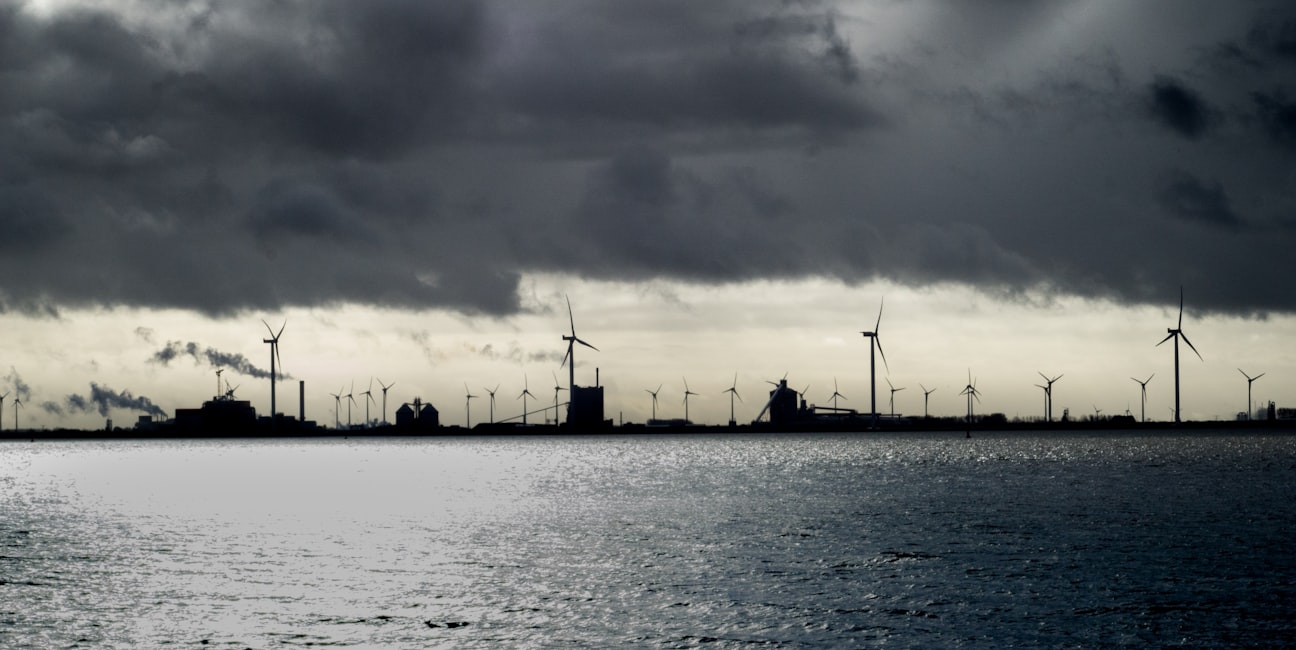
TotalEnergies and BP are seeking to exit offshore wind contracts in Germany's North and Baltic Seas — licences they paid hundreds of millions of euros to secure. The problem is not a change of corporate strategy on renewables. It is the grid.
TotalEnergies holds offshore wind rights totalling 7.5 gigawatts in Germany. BP holds rights to over 4 gigawatts. Together, the capacity they are trying to exit exceeds Germany's entire current installed offshore wind base, which stands at less than 10 gigawatts. A full withdrawal by both companies would create a severe shortfall against Germany's 2030 renewable energy targets.
Offshore wind farms can only deliver power if underwater cables connect them to the mainland grid. Germany's grid infrastructure has not kept pace with its licensing programme. Delays in constructing the necessary connections have left companies holding valid licences for capacity they cannot build economically, because the offtake infrastructure will not be ready on the timelines the original auctions assumed. TotalEnergies stated explicitly that individual projects from the auction rounds of 2023 to 2025 are likely not to be realized, attributing this to delays in grid connections and changes in economic framework conditions. The grid is not a secondary problem. It is the problem.
Exit is not straightforward. TotalEnergies has already invested nearly €800 million in upfront costs and posted a €750 million security deposit. Under Germany's current licensing framework, companies cannot simply hand back leased areas. If they miss construction deadlines, the Federal Network Agency can revoke their licences and impose penalties on top. The companies are caught between the economic cost of proceeding with projects that no longer make financial sense and the legal and financial cost of exiting contracts that were deliberately designed to be hard to leave.
Germany's offshore wind industry association BWO has urged the government to postpone the next round of offshore auctions, scheduled for 2026. The argument is direct: licensing more capacity into a system that cannot connect what has already been licensed will only deepen the problem.
Offshore wind is central to Germany's plan to compensate for the nuclear and coal capacity it has phased out. If TotalEnergies and BP succeed in exiting, the question is who steps in at the same licence terms — and whether new entrants would face identical grid constraints. The most likely outcome is either a regulatory restructuring that allows some form of exit or renegotiation without full penalty, or a significant gap in Germany's offshore build-out that pushes its 2030 targets out of reach.
The CDU-led government that took office earlier this year has signalled a pragmatic approach to energy transition costs, but it has limited political room to be seen accommodating energy majors at the expense of Germany's renewables programme. The TotalEnergies and BP situation will be an early test of how it manages that tension.
This is a story about what happens when governments licence capacity faster than the infrastructure to support it can be built. Germany sold the future; the grid did not keep up. The cost of that sequencing failure is now landing on the companies that bid in good faith, on the federal budget, and on Germany's credibility as a destination for large-scale clean energy investment. Other EU member states running ambitious offshore wind programmes — the Netherlands, Denmark, Poland — are watching to see how Berlin resolves this, because the lesson it sets will shape investor confidence across the region.