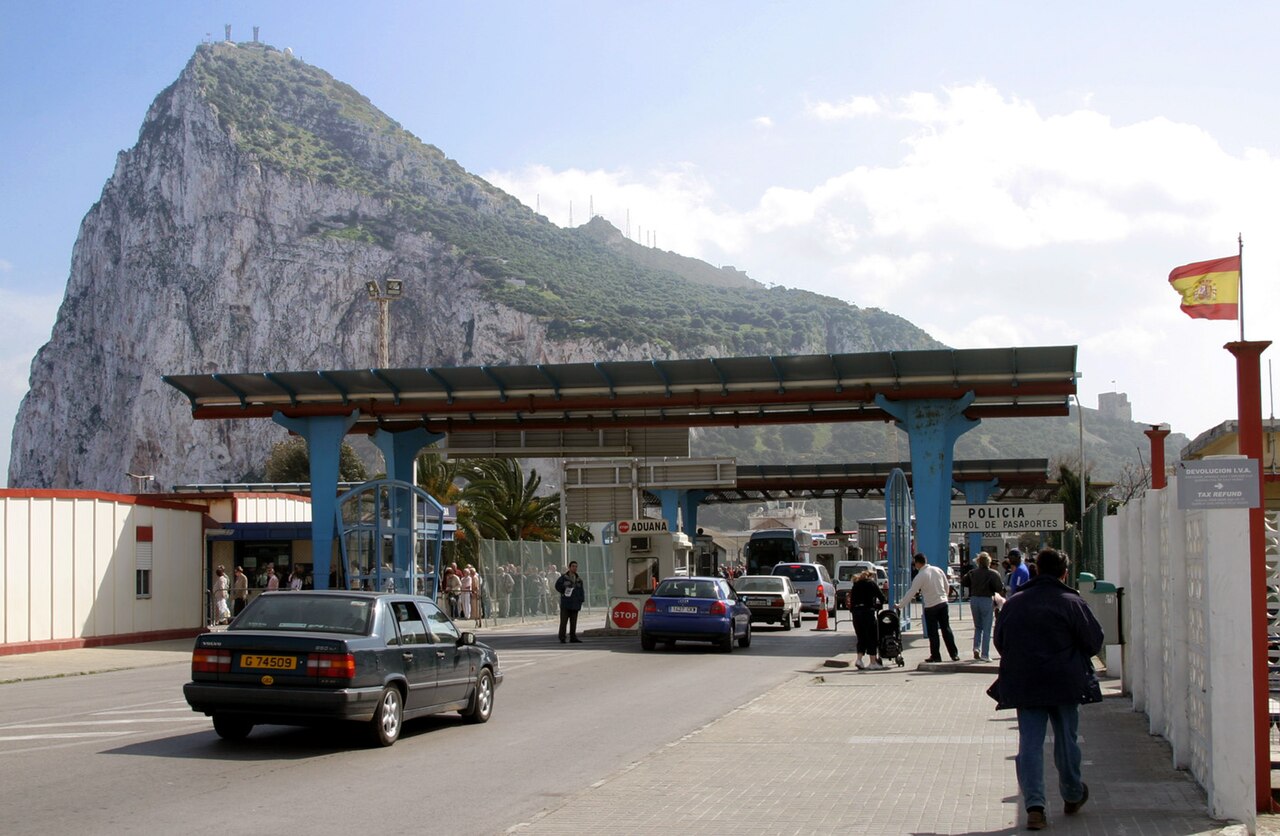
The last stretch of hard border on the European mainland disappeared at midnight. As 15 July began, workers dismantled the fence separating Gibraltar from the Spanish town of La Línea de la Concepción, and crowds gathered on both sides to watch a barrier that had defined the Rock for generations simply cease to exist. "At last, no more queues," read one of the banners.
The fence, known locally as la verja, went up in 1909 and once stood as a symbol of division. Spain's dictator Francisco Franco sealed it completely from 1969, cutting off the territory for more than a decade and throwing the surrounding Spanish region into hardship. Even after it reopened, the crossing meant double passport checks and, at rush hour, long delays for the roughly 15,000 people who commute into Gibraltar every day, more than half the territory's workforce.
From this week those checks are gone. Travellers moving between Gibraltar and Spain cross freely. Instead, passport control shifts to Gibraltar's airport and port, where UK and Spanish officers now sit side by side to screen arrivals from outside the zone.
The arrangement is the product of a treaty signed in Brussels on 14 July by the European Commission and the United Kingdom, the result of more than four years of talks. Gibraltar had been left out of the 2020 Trade and Cooperation Agreement that governs post-Brexit ties, leaving its 40,000 residents facing the prospect of a hard EU frontier on their doorstep.
The new deal brings the territory inside the Schengen free-travel area in practice, with dual border checks handled by Spain and the UK. According to the Commission, the agreement enters provisional application on 15 July and fully safeguards Schengen, the EU's single market and its customs union, while EU Commissioner Maroš Šefčovič, who signed for the bloc, called it the completion of the legal framework governing relations with the UK after Brexit.
The politics were delicate. Britain's minister for Europe, Stephen Doughty, who signed for the UK, said the treaty "delivers certainty for the people and businesses of Gibraltar, protects British sovereignty, our military facilities, and has the full backing of the Government and Parliament of Gibraltar." Spain's foreign minister, José Manuel Albares, and Gibraltar's chief minister, Fabian Picardo, attended the signing. Picardo, who backed the deal, and the mayor of La Línea met symbolically at the frontier as it opened.
Both London and Madrid insist the agreement leaves the underlying sovereignty question exactly where it was. What it changes is the daily reality on the ground: the movement of people and goods across a line that, until this week, still required a passport.
Gibraltar is small, but the symbolism is large. Nearly ten years after the Brexit referendum, the EU and UK have quietly closed the single most awkward piece of unfinished business, and they did it not by hardening a border but by dissolving one. For a bloc built on free movement, folding a British territory into Schengen is a reminder that pragmatic, locally driven fixes can still outrun the politics of Brexit. The harder test now is administrative: making dual checks at the airport and port work smoothly enough that the goodwill on display this week survives the first busy tourist season.