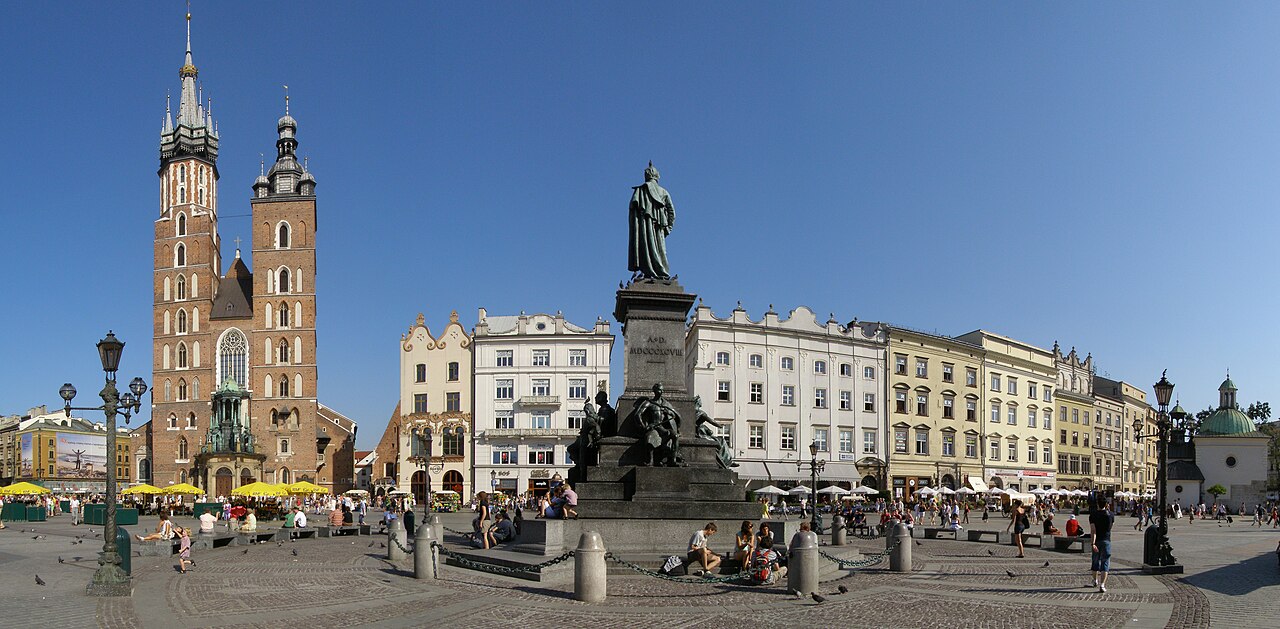
Poland woke on Sunday to a kind of violence it rarely sees. On Saturday, a gunman fired at random people around Kraków's Main Square, one of the busiest tourist spots in central Europe, and left six people dead.
Police say a 24-year-old Polish citizen drove into the square and began shooting at passers-by. Six people died, four women and two men. At least 15 more were wounded, among them two police officers, one seriously. A tram driver said a bullet shattered his window, and two horses used for carriage rides were hit and survived.
Officers shot and wounded the man in a gunfight a short distance away, and he went to hospital for surgery. Police found more weapons and ammunition in his car. A police spokesperson said he acted alone and that the public is not at risk. Poland's defence minister called the attack an act of terror. A government minister later said the suspect was fascinated by far-right ideologies, according to wire reports. Prosecutors are still working to establish his motive.
Poland declared Sunday and Monday days of national mourning. Kraków's mayor, Łukasz Gibała, extended the city's mourning to Wednesday while keeping the city open to visitors. Prime Minister Donald Tusk praised the officers who stopped the gunman, and President Karol Nawrocki sent his sympathies to the families. Warsaw added road barriers and extra security around its old town.
The shock travelled to Brussels. The European Parliament is flying the Polish and EU flags at half-mast until late Monday, and Poland's mission to the EU has postponed its National Day reception, which was due to take place tonight.
Mass shootings are uncommon in Poland. About 411,000 people hold gun permits, and it is still unclear whether the weapons used on Saturday were legally held. The attack follows three school attacks in the Mazovia region within four days in mid-October, which had already put violence and security on the national agenda.
Bloomberg described it as Poland's deadliest shooting in decades. Commentators in Brussels and Warsaw are linking it to the temperature of Polish politics. The country has just lived through a violent clash over the Constitutional Tribunal, with riot police, a president turned back from a state visit and both sides trading accusations of a coup. Analysts warn that extreme polarisation raises the risk of radicalisation at the edges, and the minister's remarks about the suspect's views will feed that argument.
The first questions are practical. How did a man with this arsenal get it, and what did the authorities know? Expect pressure for tighter checks on gun permits and for scrutiny of online far-right networks. The second set is political. Tusk's coalition and the opposition now have to decide whether to use the tragedy against each other, or to lower the temperature. Poland observes its Independence Day on Wednesday, 11 November, when large crowds usually gather in cities across the country, so the way both camps speak this week will matter. For the EU, the attack is a reminder that domestic terrorism sits alongside the Russian-linked sabotage that dominates security debates in capitals.