

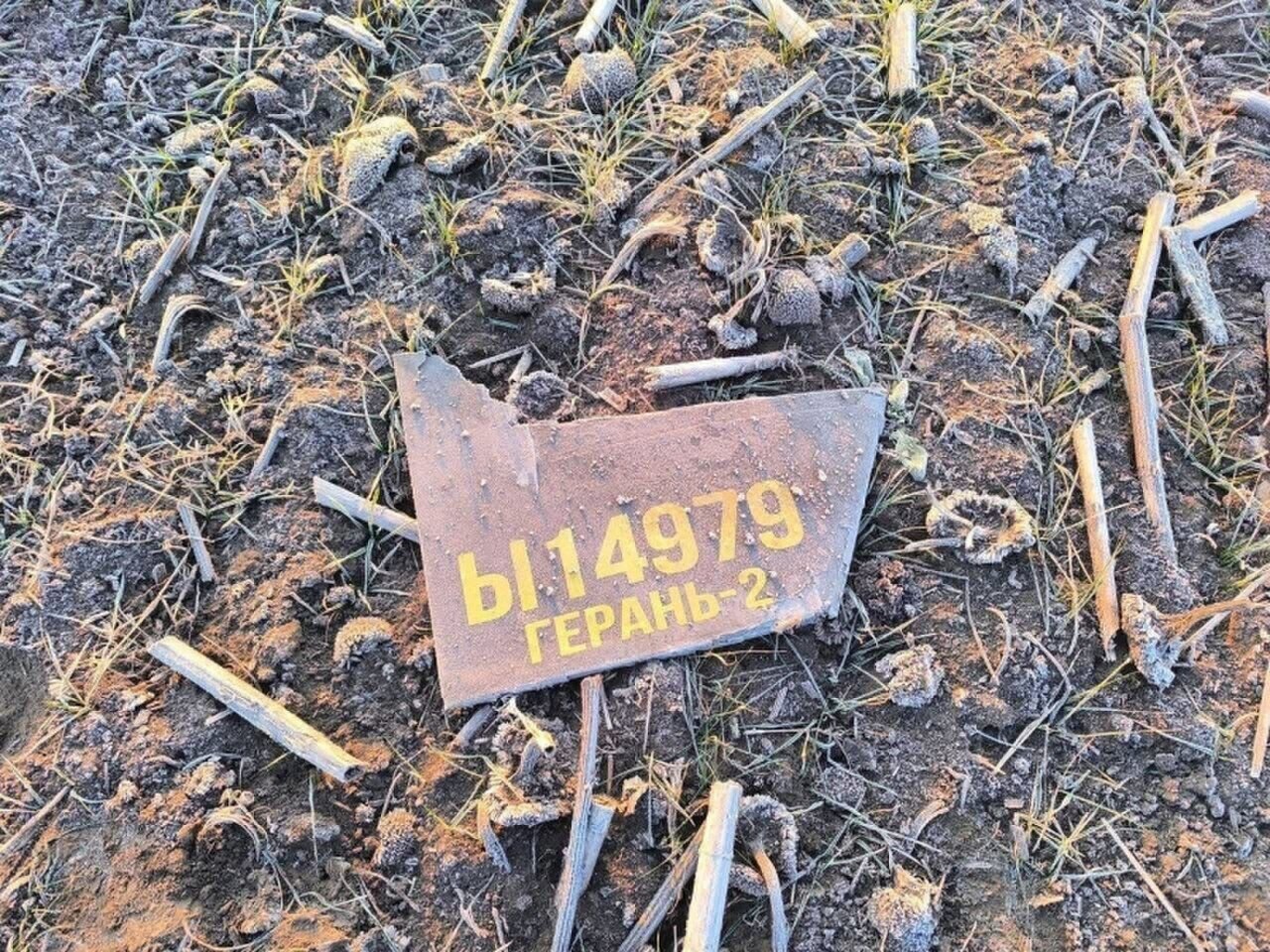
Romanian authorities confirmed on Saturday that fragments of a Russian Geran-2 drone — Moscow's military designation for the Iranian-designed Shahed kamikaze drone — were recovered near Galați, a major Danubian port city roughly 15 kilometres from the Ukrainian border. The drone appears to have missed its intended Ukrainian target and continued into Romanian airspace before crashing.
It marks at least the third confirmed case this year in which Russian drone wreckage has reached NATO soil in Romania, continuing a pattern that has become a recurring source of tension between Bucharest, Brussels, and Moscow.
The incident drew a pointed response from Kremlin official and former Russian president Dmitry Medvedev, who warned Romania of unspecified consequences for its support of Ukraine — including air defence equipment transfers and access to logistics corridors. Romanian officials rejected the statement as inflammatory provocation and lodged a formal protest with Moscow.
NATO's Article 5 collective defence clause requires the alliance to treat an armed attack on one member as an attack on all. But drone wreckage falling on NATO territory has occupied a contested legal and political space since Russia's full-scale invasion of Ukraine in 2022. Alliance members have generally declined to invoke Article 5 in such cases, treating them as accidental overflights rather than deliberate attacks.
That position is becoming harder to sustain. Romania has upgraded radar and interception coverage along the Danube corridor in response to repeated incursions and has formally requested additional NATO air surveillance assets. Romanian officials are pushing for clearer alliance protocols on responding when wreckage crosses onto member territory — a question deferred at successive NATO ministerial meetings.
The NATO foreign ministers' meeting in June is expected to include discussion of drone incursion protocols, and the upcoming Ankara summit will face the same pressure with higher political stakes.
Three drone landings on NATO soil in a single year is a pattern that can no longer be explained away as collateral noise. Romania is right to push for clearer rules. The alliance faces a straightforward choice: develop a proportionate response doctrine before the next incident, or allow Russia to keep probing the eastern flank without any collective cost. Every unanswered incursion erodes deterrence — and the erosion compounds.




.jpeg)


