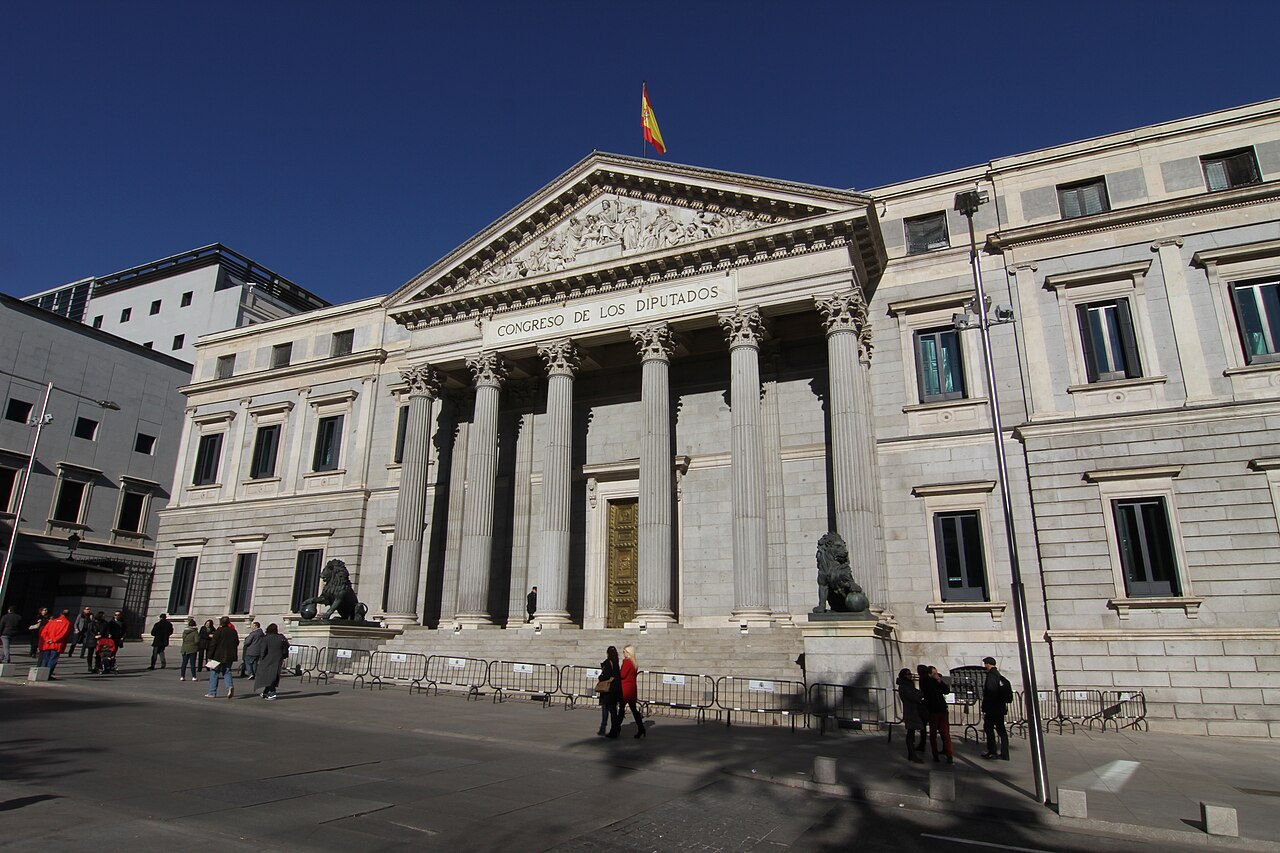
Spaniards go to the polls on Sunday, eight years into Pedro Sánchez's time in power and almost two months after parliament was dissolved on 5 October. The final surveys published before Spain's legal blackout on polling all tell roughly the same story. One set of figures puts the Popular Party (PP) at 31%, the Socialists (PSOE) at 29%, Vox at 18% and the left-wing Frente Amplio at 6%. A 40dB poll for El País has a near-identical spread: PP 31.5%, PSOE 30.3%, Vox 18%.
A majority in the Congress of Deputies takes 176 of 350 seats. That is where the numbers stop agreeing. NC Report, for La Razón, gives PP and Vox together 201 to 205 seats. El País's pollster puts the pair above 190. The state pollster, the CIS, is far more cautious: it has the PSOE on 134 to 143 seats and PP plus Vox on 155 to 171, which would leave the right short.
The CIS also reckons about a quarter of voters make up their minds in the final week. Turnout, and how many of those late deciders a campaign fought partly on social media drags to the ballot box, will settle which projection is right.
Thursday night's four-way televised debate was the last big set piece. It also previewed the two blocs that may emerge on Monday. Sánchez and Ada Colau, the former Barcelona mayor who leads Frente Amplio, sounded like partners who had already worked out how to govern together. Alberto Núñez Feijóo of the PP and Santiago Abascal of Vox looked less at ease side by side.
The sharpest exchange was about money. Colau went after Abascal over a plan, floated by Vox's economic spokesman José María Figaredo in an interview with Bloomberg, to cut €112 billion of spending, roughly 7% of Spain's GDP. Sánchez warned the cuts could tip Spain into recession and said the figure matched the country's entire annual health budget. Vox says the number is half of a €224 billion pool of subsidies and regional transfers it wants to review, and that health, education and security would be protected.
The debate also produced the campaign's last row. Feijóo told Colau to keep quiet. Sánchez called the remark sexist. Feijóo refused to take it back. Sánchez, for his part, had skipped Thursday's EU leaders' summit in Brussels to prepare for the night.
Abroad, the puzzle is how a leader with Sánchez's profile can be losing. Spain has been one of Europe's economic success stories, growing more than twice as fast as the euro area. It pushed through labour and social reforms. Sánchez has stood up to Donald Trump and Benjamin Netanyahu, backed the Palestinian cause and defended immigration when most of Europe moved the other way.
At home the list runs the other direction. Spain has not passed a budget since 2023. The amnesty law for Catalan separatists divided the country, and corruption cases have followed his government. Around 80,000 migrants crossed into Ceuta from Morocco without authorisation. Two train crashes killed 115 people. Housing costs have outrun incomes, and many young Spaniards say they see little of the growth.
A PP-led government would pull Spain towards the EU's centre-right mainstream. Carla Hobbs, a policy fellow at the European Council on Foreign Relations, argues that a Feijóo government could mean tighter migration controls, a weaker push on emissions and an effort to repair relations with Washington. That would be a clear break with Sánchez on migration and on Trump.
Vox complicates the picture. The two parties overlap on migration, but Vox wants powers moved from Brussels back to national capitals, and Abascal also leads the Patriots for Europe party, the far-right family in the European Parliament. The first test could come quickly: Spain's parliament has to vote on the EU's trade deal with Mercosur. The PP backs it and Vox opposes it, so Hobbs notes that Feijóo might need Socialist votes to get it through.
Markets are watching too. Bond investors will want to know whether a right-wing government would pursue anything close to Vox's spending cuts, and whether a fractured parliament can finally pass a budget.
Sánchez has spent the week reminding voters how much weight Spain now carries in Europe. When eurozone leaders chose Pablo Hernández de Cos to run the European Central Bank on Thursday, he wrote: "A Spaniard at the head of the European Central Bank. A Spanish woman as First Executive Vice-President of the European Commission. A Spanish woman at the head of the European Investment Bank."
Sunday is the first of a string of elections that will shape the EU's next few years, and the most immediate. If the PP and Vox reach 176 seats, Spain joins the countries where the far right sits in government. It would also remove the most visible socialist leader in the European Council just as the bloc heads into a December summit on its next seven-year budget. If the right falls short, Spain faces another long coalition hunt, probably with Catalan and Basque parties holding the balance. Either way, Brussels will read the result as a signal for France, where Marine Le Pen's National Rally leads the polls ahead of next spring's presidential vote. Sánchez has beaten the polls before. This time he needs the late deciders to break his way almost unanimously.