Thirty leaders gathered in Kyiv on Monday to mark the thirty-fifth anniversary of Ukraine's restored independence, and to declare that air defence is now the emergency. The co-chairs' statement issued by 10 Downing Street said they would "strengthen its air defence as a matter of urgent priority". A few hours earlier the European Commission had released €6.1bn for precisely that.
Then Volodymyr Zelenskyy published a set of numbers Ukraine normally keeps classified, and they explain why the sentence and the money do not meet.
Ukraine received 675 American Patriot interceptors in 2023. In 2025 it received 364. This year's projection is 264. Kyiv has asked for at least 300 to get through the winter. Zelenskyy put Russian ballistic-missile production at roughly 100 a month.
Those four numbers are the whole story. Deliveries have fallen by about 60 per cent from the 2023 peak while the threat has grown, and the gap between what Ukraine is asking for and what it expects to receive is not large in cash terms. It is large in factory terms. An interceptor is not a commodity that can be bought faster by bidding higher; it is an item with a fixed annual output, a queue of buyers and a single dominant supplier.
The consequence is already visible in the intercept rate. Ukraine's success against Russian ballistic missiles has collapsed from more than seventy per cent to something close to nothing. In one recent bombardment of Kyiv, not a single incoming missile was stopped. Ukraine sustained 376 missile strikes in June alone. The co-chairs' statement recorded the highest civilian casualty toll since the full-scale invasion began, a children's hospital hit the week before, and damage to the Kyiv-Pechersk Lavra.
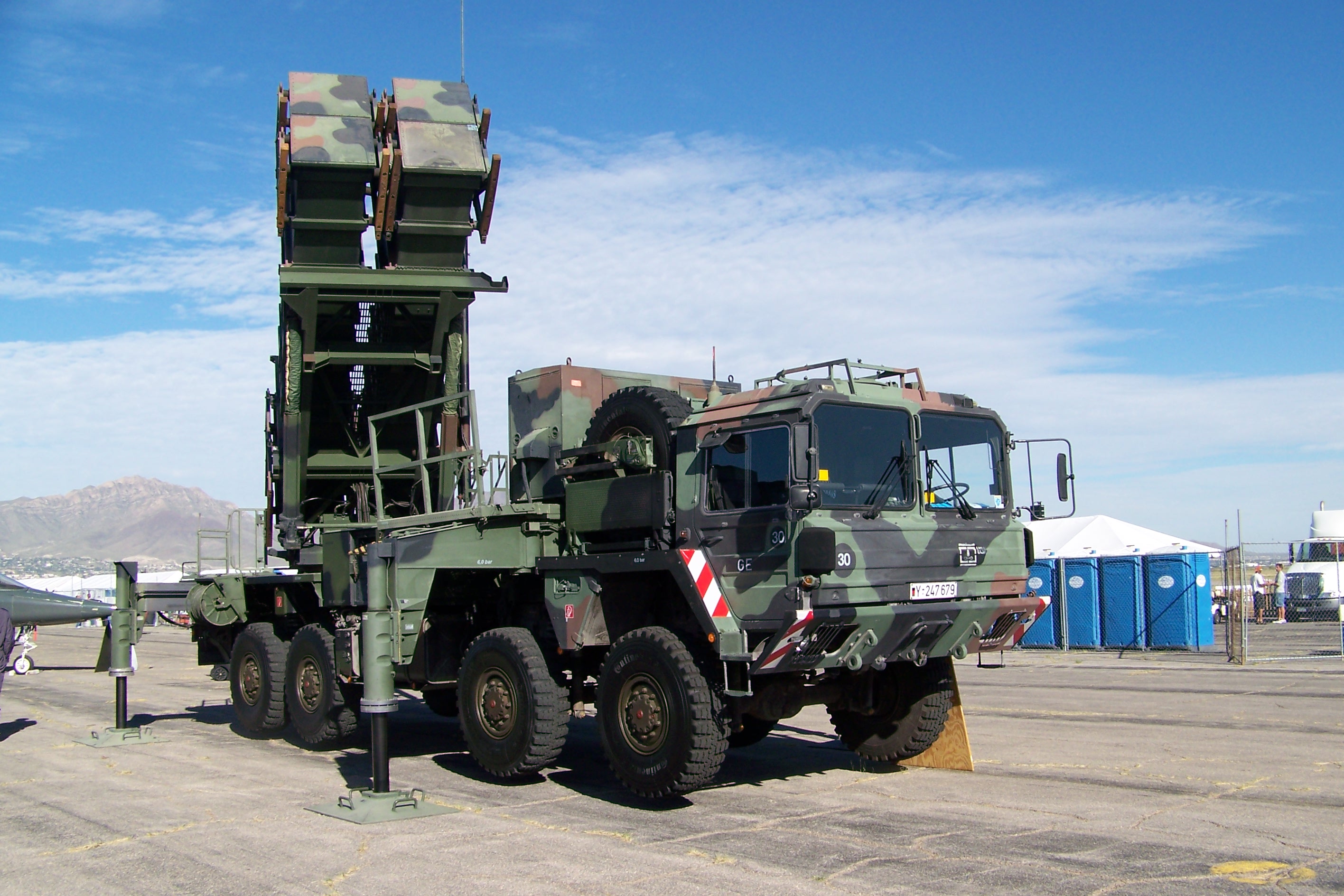
The reason the queue is so long has little to do with Ukraine. American stocks of PAC-3 MSE interceptors stood above 2,300 before the war with Iran and are now around 800. THAAD inventories have been roughly halved. In the first ninety-six hours of that conflict, the United States and its Gulf partners fired 943 Patriot rounds — more than Lockheed Martin's entire annual output of about 620.
Washington has been rebuilding since, awarding Raytheon a $22.9bn contract on 17 August to lift cruise-missile production. But a contract signed in August 2026 does not put interceptors on a launcher in Ukraine in the winter of 2026. Meanwhile the United States has curbed direct military aid, so American Patriots now reach Ukraine largely on the basis of European money. Europe has become the payer of a system it does not manufacture, drawing on a stockpile another war emptied.
Germany's position illustrates the bind. Berlin has said it is willing to hand over further Patriot systems, but only against a guarantee that its own arsenals are replenished within six to eight months — a condition that depends entirely on the same American production line.
The European Commission's announcement on Monday was real money and real intent. The €6.1bn envelope is drawn from the €90bn EU loan agreed by the European Council in December 2025 and finalised by the Council in April, and is earmarked for air and missile defence systems, missiles, ammunition and radars. The Commission said most of the procurement will go to European defence companies, with the emphasis on countering Russia's intensified use of ballistic missiles and jet-engine drones.
"As Russia intensifies its attacks, we are stepping up to help Ukraine protect its people and defend its skies," Commission President Ursula von der Leyen said. "Europe stands with Ukraine and we will deliver what it needs, when it needs it." Defence Commissioner Andrius Kubilius said the EU was "enabling Ukraine to procure the missiles and air-defence systems it urgently needs".
The qualifier in von der Leyen's sentence is "when it needs it". European industry can deliver a great deal — the Franco-Italian SAMP/T is a genuinely European system, and Kyiv expects one battery this autumn. The second, on Zelenskyy's own account, depends entirely on production. That is the honest version of Europe's position: the will is there, the euros are there, the units are not.
Read the day's deliverables closely and a pattern emerges. The British government cleared the missile maker MBDA to release classified information on UK components of the SCALP, the French variant of the Storm Shadow, with France and Ukraine intending to open assembly lines for the weapon on Ukrainian soil. Leaders committed to "share relevant technologies", including through the Anti-Ballistic Missile Coalition. Norway pledged $9bn for next year, matching this year's record.
Technology transfer and co-production are the right long-term answer, and they are the one thing Europe can offer that America currently cannot spare. They are also an admission. When a coalition's most concrete offering is intellectual property rather than hardware, it is telling you where the shortage is.
Two other details are worth holding onto. No American representative was identified among the participants at a meeting convened by France and the United Kingdom in March 2025 and now numbering around thirty-five countries. And Zelenskyy spent the run-up pressing the European Parliament to move the legislation releasing €30bn — the macro-financial tranche of the same €90bn package — arguing the money was tied to that vote and needed for the defence of the whole country.
Europe has spent three and a half years learning that it can fund a war. What Monday exposed is that funding and supplying are different verbs. The coalition's instruments that work are financial and legal: the co-chairs' statement claims sanctions and economic measures have deprived Russia's war chest of at least $495bn since February 2022, which is a serious number produced by tools Europe genuinely controls. The instrument that does not work is the one Ukraine needs before December, and it is not controlled in Brussels, Paris or Berlin.
The honest reading is not that Europe is failing Ukraine. It is that Europe built an air-defence posture on an American supply chain and then discovered, via a war in the Gulf, what a single point of failure costs. The €6.1bn will eventually buy European systems from European factories, and the Ukrainian assembly lines will eventually matter. "Eventually" is the problem. Between now and the spring, the arithmetic is 100 Russian ballistic missiles a month against 264 interceptors a year — and no amount of European money changes the second number before the first one does its work.