

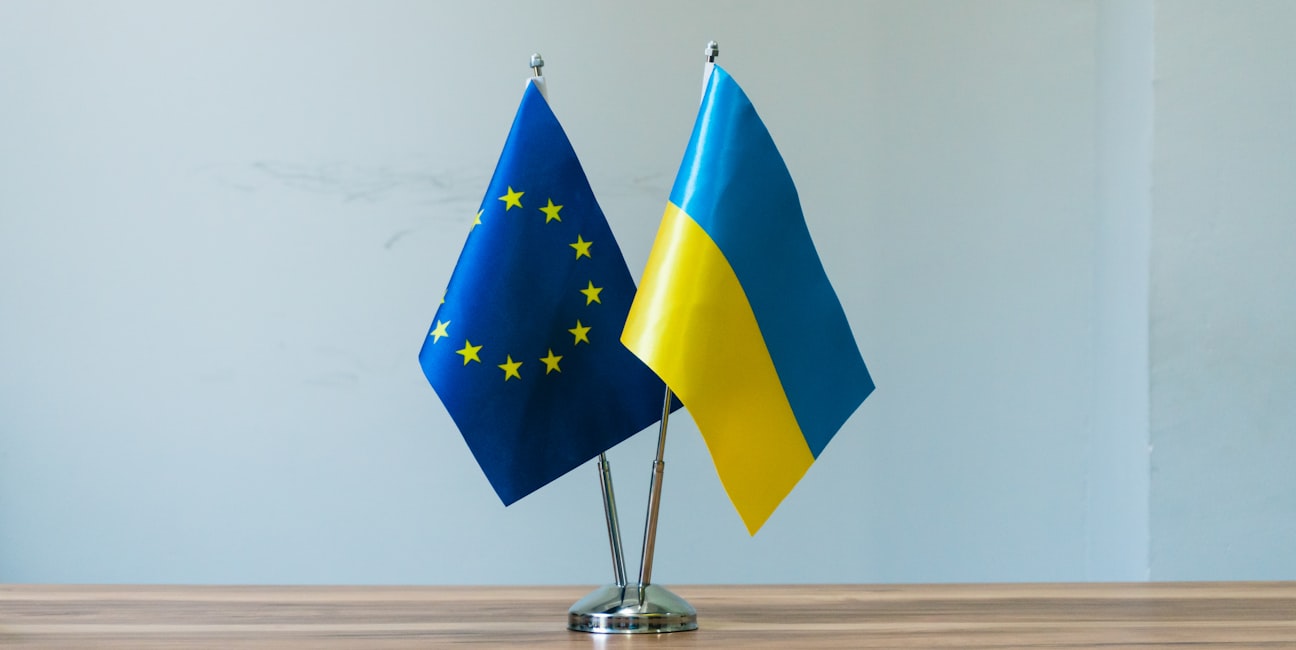
For the first time since Russia's full-scale invasion turned their European ambitions into a question of survival, Ukraine and Moldova have formally begun negotiating their way into the European Union.
Ukraine and Moldova won candidate status in 2022, in the months after Russia's invasion. Since then their path had been blocked at the very first gate. On 15 June, that gate finally opened: the bloc's member states agreed unanimously to launch the first cluster of negotiations, after preparations were approved on 3 June.
“We will open the cluster on fundamentals; the backbone of the accession process,” European Commission President Ursula von der Leyen said ahead of the decision. “It covers the core values and principles on which the EU is built, from the rule of law to strong democratic institutions.”
For more than a year, the obstacle was Budapest. Viktor Orbán had blocked the opening of negotiating clusters with Ukraine, citing disputes over the rights of the ethnic Hungarian minority in Ukraine's Zakarpattia region, even though Kyiv held candidate status.
The deadlock broke with a change of government. Péter Magyar, who replaced Orbán as Hungary's prime minister earlier this year, agreed to drop the veto, clearing the way only after Kyiv signed an action plan on minority rights and committed to a rule-of-law roadmap — the central grievance between the two capitals.
The cluster now on the table is the most sensitive of the six. It covers the rule of law, the judiciary, fundamental rights and democratic institutions — the conditions that decide whether a candidate is genuinely ready to join. By design it is the first cluster opened and the last to close, and it requires the unanimous backing of all 27 members to begin.
Marta Kos, the EU's enlargement commissioner, described the move as the biggest step in either country's bid since they were granted candidate status, and said she expects all five remaining clusters to open in July.
Moldova advanced on the same day. President Maia Sandu confirmed she had signed a decree allowing accession negotiations to move forward, framing membership as the small country's route to stability. Becoming an EU member, she said, is Moldova's path to peace, prosperity and a better life for all its citizens — a pointed message in a country that Moscow has repeatedly tried to destabilise.
What makes the moment unusual is that Ukraine is negotiating entry while fighting for survival. President Volodymyr Zelensky thanked the EU for the “robust political will” to begin talks despite the ongoing Russian assault, and Kyiv increasingly casts itself not as a supplicant but as a contributor to European security, given its battlefield experience and defence-tech innovation.
Opening talks is not the same as joining. The fundamentals cluster is the hardest to close, the reforms ahead will take years, and any single member state can still slow the process at later stages. The July timeline floated by Kos is ambitious.
But the political significance is hard to overstate. For the first time, Ukraine and Moldova are locked onto a formal, negotiated track into the Union rather than waiting in the antechamber — and the veto that symbolised European hesitation has been lifted. For Moscow, which has spent years insisting Ukraine's Western future was a fantasy, that is the most unwelcome signal of all.


.png)


