For most of Donald Trump's second term, Greenland policy meant one thing to Copenhagen: fending off a US president who kept describing the island as something America should simply own. Danish officials summoned the US chargé d'affaires last year over reports that American intelligence agencies had been tasked with mapping Greenland's independence movement and its residents' views on US resource extraction. Mette Frederiksen's line at the time was blunt — "you cannot annex another country."
That standoff produced, this week, a treaty instead. Trump, Frederiksen and Greenland's premier Jens-Frederik Nielsen signed a security agreement on the sidelines of the UN General Assembly in New York on 22 September, trading the annexation demand for a deal that gives the US military far more of what it wanted — access — without the sovereignty fight.
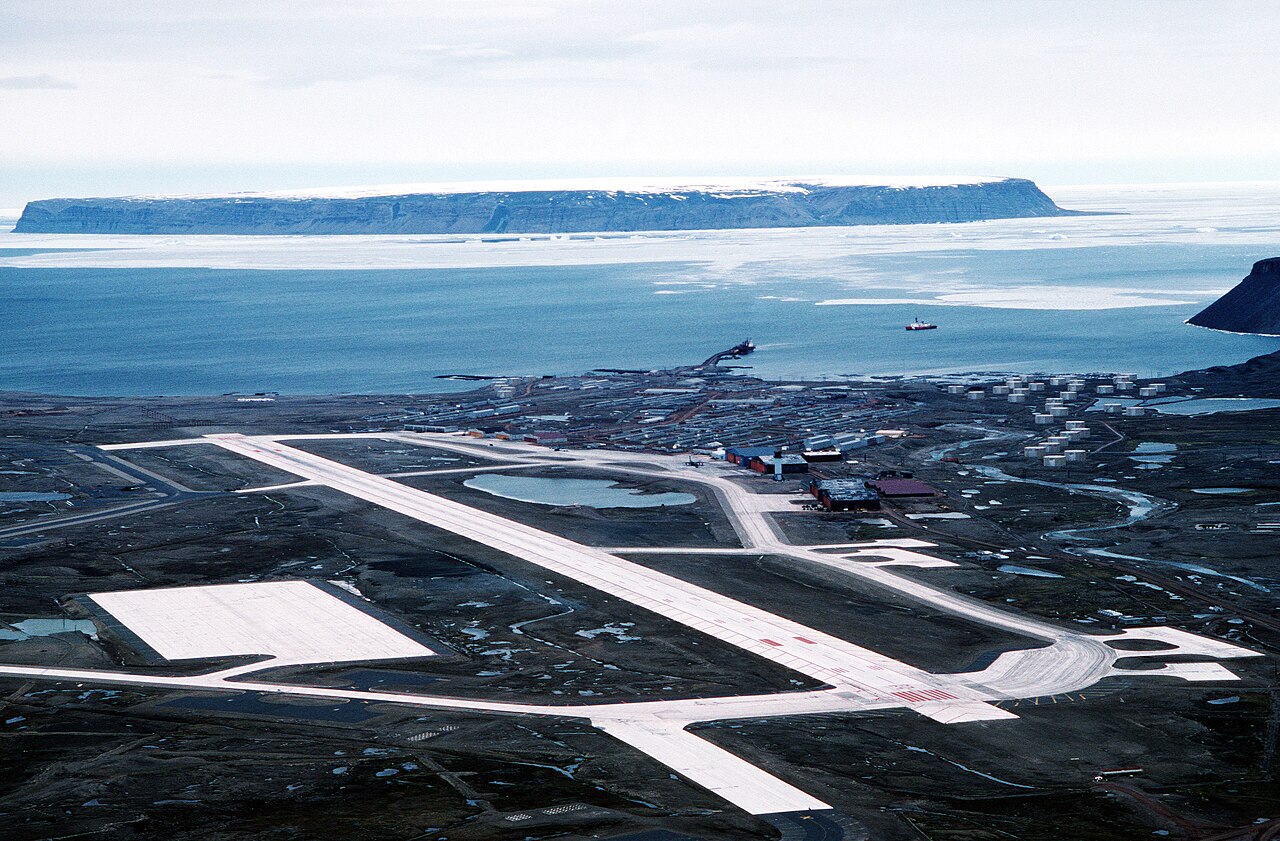
The pact modernises and expands the US footprint at Pituffik Space Base, the American installation in northwest Greenland, and opens two additional sites to US forces: Narsarsuaq in the south and Mestersvig in the east. American aircraft gain the right to fly over and land anywhere in Greenland, including its territorial waters, and Washington secures broader rights to build and operate defence infrastructure.
Two clauses aim squarely at Beijing and Moscow. Non-NATO countries are barred from establishing bases or a persistent military presence in Greenland without unanimous approval from the alliance, and investors from outside NATO and the EU are blocked from sensitive sectors — a direct response to years of Western unease over Chinese interest in Greenlandic mining and port infrastructure.
The provision Copenhagen and Nuuk fought hardest for sits in the deal's fine print: Denmark and Greenland retain formal sovereignty, and the arrangement is explicitly designed to survive Greenlandic independence, with any future independent Greenland inheriting Denmark's obligations under the treaty rather than renegotiating from scratch. Frederiksen called it "a deal that can last forever." Nielsen, whose government has spent two years insisting the island "will never, ever be a piece of property that can be bought by just anyone," described the outcome as a "win-win-win." Trump, for his part, said the agreement was "tremendous for Europe and for the United States and for everybody" and pledged to "immediately begin the process of developing a large military presence."
The EU was not a party to the signing — Greenland left the European Community in 1985 and sits outside the Union as a Danish Overseas Country and Territory — but NATO Secretary-General Mark Rutte and European Council President António Costa both welcomed the deal, with Costa framing it as grounded in "respect for sovereignty" and "self-determination." The timing is pointed. Just two weeks earlier, Ursula von der Leyen had flown to Nuuk to sign her own €200 million Global Gateway partnership with Greenland, covering satellite connectivity, hydropower and critical raw materials, with roughly €530 million pencilled into the EU's next long-term budget. Brussels has been positioning itself as Greenland's second-largest external backer after Copenhagen, partly on the same bet Washington is now locking in by treaty: that Greenland's rare earths and Arctic shipping routes will matter far more than its 57,000 residents alone would suggest.
The security pact removes the near-term risk of a sovereignty crisis inside NATO — a genuine relief for an alliance that spent a year worrying a member state's territory could become a point of internal conflict. But it also cements, by treaty rather than by troop presence alone, American primacy over the Arctic's most strategically located island just as the EU is trying to build its own foothold there through money rather than bases. Brussels can still compete on infrastructure and critical minerals financing, and Costa's welcome suggests the EU has decided a treaty-bound US is preferable to an unpredictable one. What the deal does not resolve is the longer contest over who Greenland's rare earths ultimately serve: a Washington now guaranteed physical access for generations, or a Brussels betting that money moves faster than military logistics.