

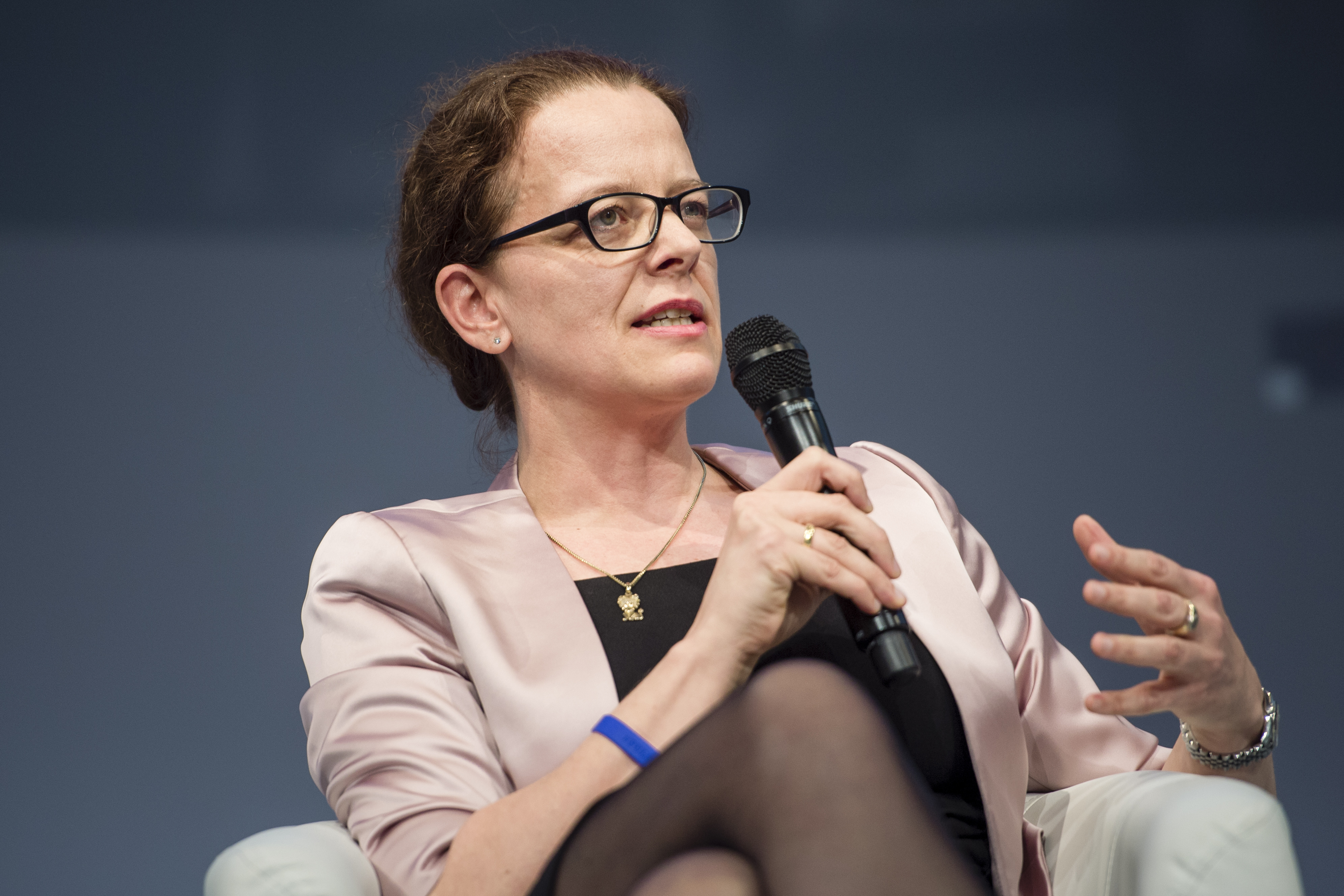
The European Central Bank confirmed on 24 September that Executive Board member Isabel Schnabel will resign her seat on 3 January 2027 to take up a senior post at the International Monetary Fund the following day, as its Financial Counsellor and director of the Monetary and Capital Markets Department. The ECB's Ethics Committee ruled no cooling-off period was required, and Schnabel will not handle IMF-related matters for the remainder of her term. Her successor will be appointed by the European Council under the standard procedure set out in the EU treaties.
"Isabel has played a key role in the ECB's determination to stabilise inflation at our 2% medium-term target and has contributed enormously to the modernisation of the ECB's operations to meet the challenges of the 21st century," Christine Lagarde said in the ECB's announcement.
Schnabel's departure would be routine turnover in isolation. It lands instead inside a board already bracing for two much bigger exits: Chief Economist Philip Lane steps down at the end of May 2027, and Lagarde's own term as president expires in October 2027. Taken together, three of the ECB's six Executive Board seats — including its two most consequential, the presidency and the chief economist's chair that sets the analytical frame for every rate decision — will change hands within roughly ten months. That is an unusually compressed turnover for an institution that normally rotates one seat at a time, and it explains why capitals began jockeying for position well over a year before Lagarde's actual departure date.
The mechanics are procedural but the politics are not: euro-area finance ministers invite nominations and discuss candidates before recommending a preferred choice, the European Parliament and the ECB's own Governing Council both weigh in, and EU leaders make the final appointment. Within that process, two names have pulled ahead. Klaas Knot, the Netherlands' central bank governor from 2011 to 2025 and a fourteen-year veteran of the Governing Council, is described by officials as a "smart hawk" — instinctively tight on monetary policy but willing to move with the data. Dutch Prime Minister Rob Jetten has called him a "perfect fit" for the post, one he expects to draw support from many euro-area governments.
What has sharpened the race is a reported arrangement out of Paris: France is said to be backing Knot's candidacy in exchange for a French national taking the chief economist's post that Lane vacates, with Agnès Bénassy-Quéry, Laurence Boone and Hélène Rey named as possible nominees. It would be a striking role reversal — a traditionally dovish France underwriting a Dutch hawk — driven less by conviction on interest rates than by a trade for influence over the seat that actually writes the ECB's economic narrative.
Ranged against Knot is Pablo Hernández de Cos, the former Bank of Spain governor now serving as general manager of the Bank for International Settlements in Basel, whose dovish-moderate instincts have made him the preferred candidate of Madrid. Spanish Prime Minister Pedro Sánchez threw his public support behind Hernández de Cos this week, saying he has "the leadership, also the capacity and the knowledge." Bundesbank President Joachim Nagel and European Investment Bank President Nadia Calviño are also being discussed as possible compromise names should the Knot–Hernández de Cos contest deadlock.
Sánchez's push is backed by a genuine economic argument. Spain, the euro area's fourth-largest economy, has been expanding at roughly twice the bloc's average pace and won a credit-rating upgrade from Scope earlier this month — a turnaround from the depths of the eurozone debt crisis, when Spain's own central bank governors were preoccupied with keeping the country solvent rather than running the ECB. That contrast — a fast-growing south putting forward a governor from its own recovery story, against a frugal north backing a veteran hawk — is what gives the succession fight its ideological edge: not merely who leads the ECB, but which economic instinct, expansionary or restrictive, shapes it once Lagarde is gone.
Lagarde has said only that she will leave in 2027 without giving an exact date, and she may say more when she addresses European lawmakers in Brussels on Monday. But the fact that capitals are already trading a chief economist post for a presidential endorsement, more than a year before the seat is vacant, shows how much is riding on getting the sequencing right: whoever wins the presidency will also shape who gets the chief economist's chair, and vice versa. For markets trying to read where euro-area monetary policy heads after Lagarde, personnel may be the more reliable signal for now than any policy statement — and the France–Knot arrangement, if it holds, is itself a data point: an alliance built on securing analytical influence rather than on tightening or loosening rates.


_31.jpeg)


