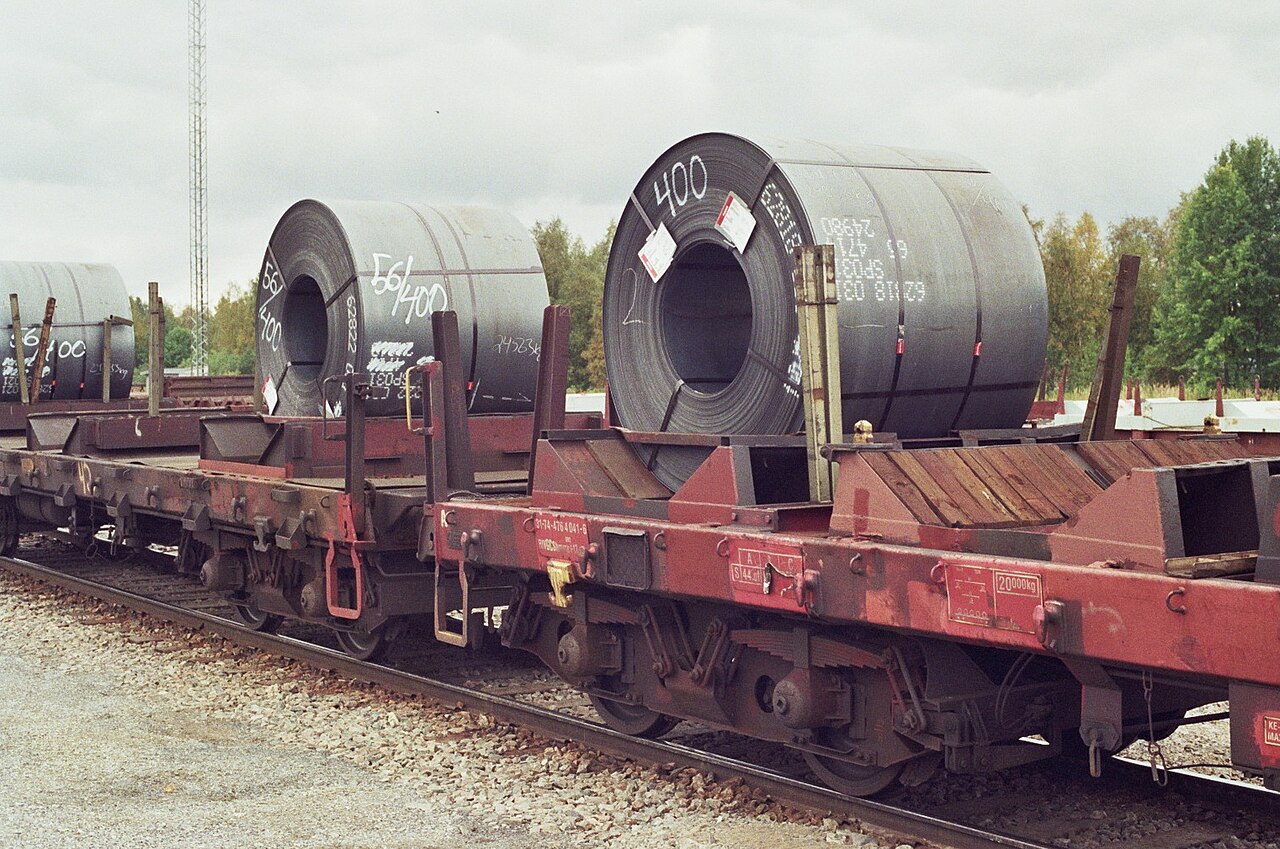
The EU has found a new way to push back against China's steel glut, and it did it with duties on steel that does not come from China. On Monday the European Commission imposed definitive anti-dumping duties on certain cold-rolled flat steel products, the thin, finished sheet used across most of manufacturing, from five economies. The rates are 9.5% for India, 27.9% for Japan, between 20.7% and 27% for Taiwan, 16% for Vietnam and between 3% and 7.8% for Türkiye.
The investigation found the products were entering the EU at dumped prices. What makes the case unusual is how the Commission reached that finding.
For the first time in an anti-dumping case, the Commission established a "particular market situation" in some of the countries under investigation. That legal finding lets Brussels set aside a country's domestic prices when it judges them distorted, and build a "normal value" for the product instead. A higher normal value means a bigger dumping margin and a higher duty.
It made the finding in two places. In India, the Commission concluded that government measures had distorted the domestic price of iron ore, the key raw material. In Taiwan, it went further. It found that "Chinese overcapacity resulted in increased imports of cold-rolled flat steel from China", leading to "downward pressure on domestic prices and deteriorating profitability for the Taiwanese industry". In plain terms, Brussels decided that China's surplus had pushed prices down in a third market, and then measured dumping on that basis.
The Commission said it considers the investigation "of systemic importance for trade defence, beyond the products and industry sectors it concerns".
The EU market for these products is worth about €23.2 billion. Domestic production is spread across 12 member states and employs more than 8,600 people. Imports from the five countries covered add up to roughly €1.17 billion: Taiwan €345 million, India €282 million, Türkiye €240 million, Japan €180 million and Vietnam €125 million.
The bigger number is China's. Brussels blames Beijing's industrial subsidies for excess production that drove the EU's goods trade deficit with China to about €360 billion last year, and the gap could reach a record this year. China's surplus does not only arrive directly. It also lowers prices in other markets, and those markets then export more cheaply to Europe. Until now, the EU's trade-defence rules were poorly suited to that indirect effect.
The steel case is part of a wider effort. Last month 15 economies aligned with the OECD, including the EU and the US, signed a pledge to confront excess manufacturing capacity in certain sectors. The statement did not name China, but everyone understood it was the target. Washington is running its own investigation into industrial overcapacity. The statutory deadline is 11 March, and the probe is widely expected to lead to higher US tariffs.
The duties also land awkwardly with friends. Japan and Taiwan are partners the EU is courting on chips and supply-chain security. India is a partner Brussels has courted with a free trade deal it sells as strategic. Türkiye is in a customs union with the EU for industrial goods. None of them will welcome being taxed for what Brussels says is ultimately a China problem.
This is a small case with a big idea behind it. By treating Chinese overcapacity as something that distorts prices in third countries, the Commission has created a legal route to defend European producers against China's surplus wherever it shows up, not only at the Chinese border. Steelmakers will want the method used again quickly. Exporters in Asia and Türkiye are likely to challenge it, possibly at the WTO. And the EU's partners will notice that the cost of Brussels's China policy is now landing on them. If the approach survives legal challenge, expect it in chemicals, aluminium and other sectors where Beijing's surplus is reshaping prices around the world.