

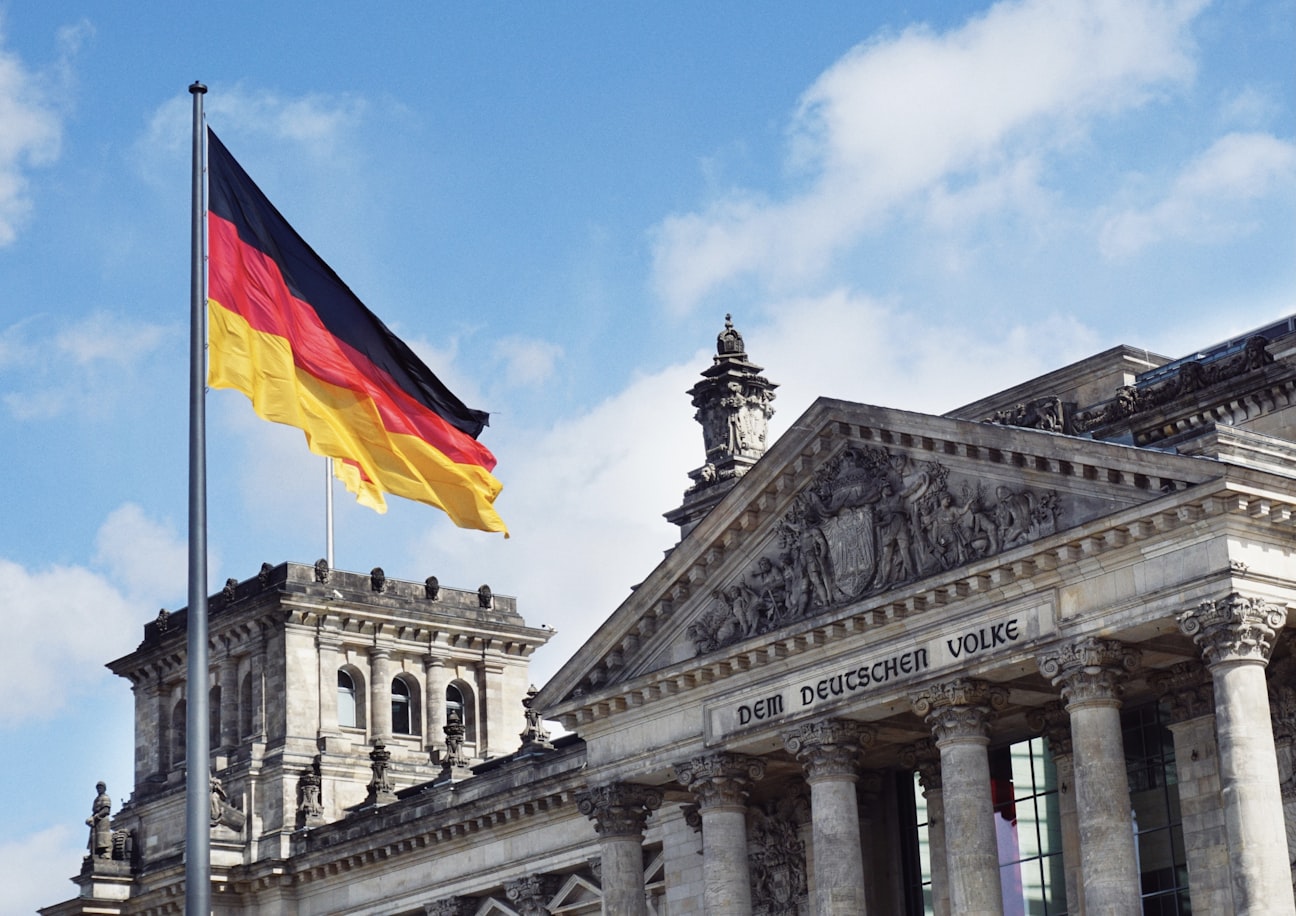
Hungarian Prime Minister Péter Magyar is in Berlin this week for meetings with Chancellor Friedrich Merz, followed by talks in Paris with President Emmanuel Macron. The tour is Magyar’s most significant European diplomatic engagement since taking office in early May, and a visible marker of how completely Hungary’s relationship with its EU partners has shifted since Viktor Orbán’s sixteen-year premiership ended.
When Tisza won a two-thirds parliamentary majority on April 12, effectively ending an era, the reaction in European capitals was something between relief and cautious optimism. Magyar was not a known quantity to most EU counterparts — a political outsider who had campaigned on an anti-corruption, pro-EU platform without governing experience. Seven weeks into his premiership, these visits to Berlin and Paris are both a courtesy call and a negotiation. The substance underneath the symbolism matters.
The meeting with Merz is the more consequential of the two, at least in the immediate term. Germany is Hungary’s largest trading partner and a key interlocutor within the European Council. Under Orbán, the Berlin-Budapest relationship had cooled significantly, strained by Hungary’s energy dependence on Russia, its repeated blocking of EU Ukraine funding mechanisms, and Orbán’s open alignment with Moscow and Beijing. Magyar’s positioning is categorically different: he campaigned on alignment with Ukraine and EU integration, and his government reversed Hungary’s veto on the EU’s Ukraine support package within days of taking office.
The substantive discussions in Berlin centre on two areas. First, Ukraine: Magyar wants Germany to treat Hungary as a reliable partner in EU coalition-building on Ukraine support, which means Merz treating Budapest as a willing vote rather than a problem to be managed. Second, EU funds: Hungary has somewhere between €10 billion and €12 billion in cohesion and NextGenerationEU funds frozen by the Commission under Article 7 and conditionality mechanisms. Unlocking those funds requires Commission sign-off, not German bilateral permission, but Germany’s political support matters enormously for whether the Commission moves quickly or slowly.
Macron’s interest in Magyar is partly ideological — both men represent a broadly liberal, pro-European centre that has been squeezed in their respective domestic political contexts — and partly strategic. France has consistently been more hawkish than Germany on enforcing EU rule-of-law conditionality, and Paris will want assurances that the reform commitments Magyar is making in Brussels are substantive rather than cosmetic. The judicial independence reforms and anti-corruption measures that Magyar’s government has begun to introduce will be scrutinised closely. The EU funds question will also feature in Paris, as France holds influence in European Council discussions on the Commission’s timeline.
Magyar’s Berlin and Paris visits are, at one level, diplomatic routine: a new leader doing the rounds of major European capitals. But the level of attention they are receiving reflects how much Hungary’s position in Europe had become a structural problem under Orbán. A Hungary that participates constructively in EU decision-making — rather than blocking, trading vetoes, and cultivating external patrons — changes the coalition arithmetic on issues from Ukraine to China to enlargement. It also changes the internal dynamics of the European Council, where Orbán had been a recurring source of vetoes that required side-payments or workarounds. Whether Magyar can deliver on the expectations he is generating in Berlin and Paris will define whether this is a genuine geopolitical realignment or a political honeymoon that fades as domestic pressures accumulate.





.png)


