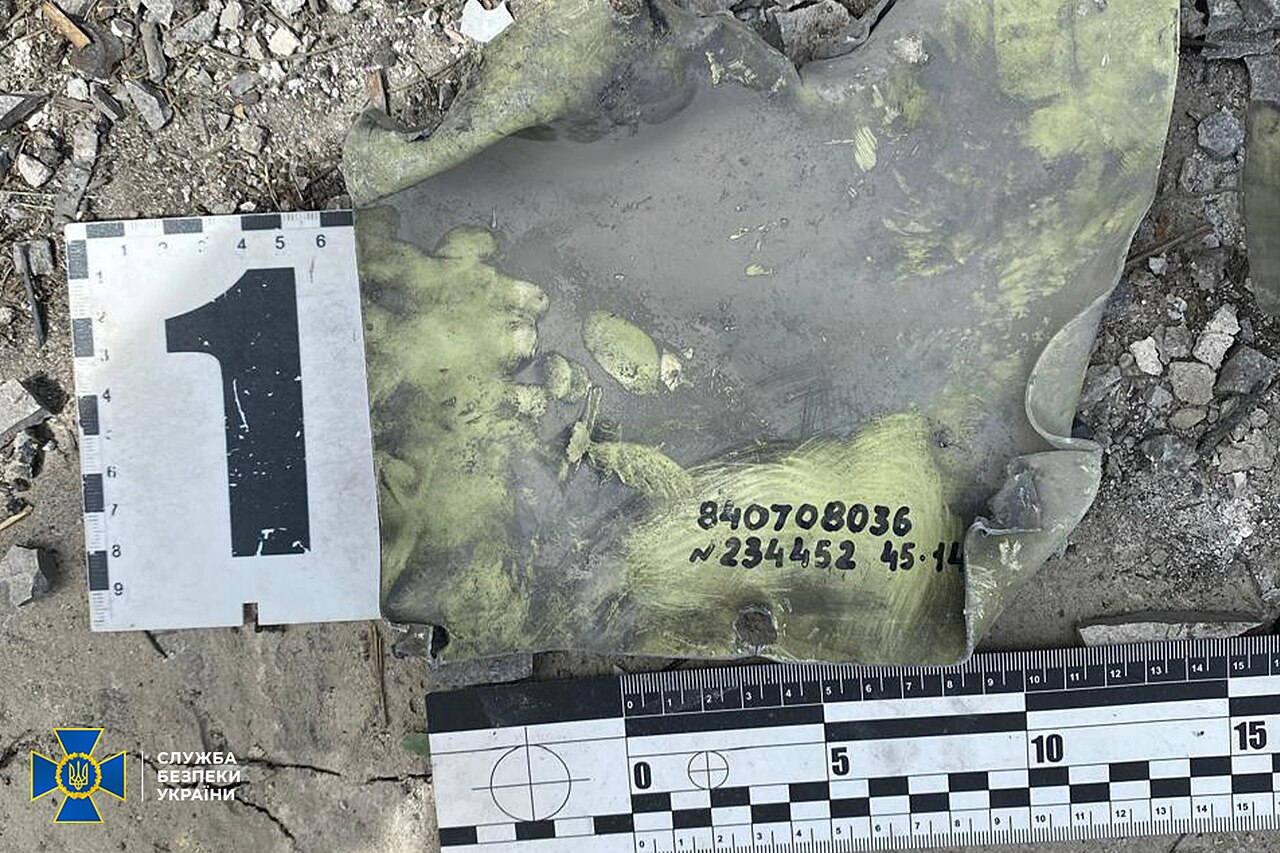
Russia fired one of its largest barrages of the war at Ukraine overnight into Friday, and part of it ended up in Poland. A Kh-101 cruise missile slammed into a field beside a forest near the village of Nowy Lipowiec in Biłgoraj County, Lublin province, and caught fire. A second object, which Poland's defence minister said was likely also a missile, came down near Rudnik nad Sanem in Podkarpackie. A jet-powered drone crashed near Mołodycz. No one was injured, and no critical infrastructure was hit.
The numbers behind the night are stark. Lieutenant General Ireneusz Nowak, who heads Poland's Operational Command, said Russia launched 26 Kalibr and 72 Kh-101 cruise missiles plus 503 drones, 202 of them jet-powered. His command tracked 11 objects as potential threats to Polish airspace. Three crossed the line. According to Kosiniak-Kamysz, the Kh-101 spent about three minutes over Polish territory.
Warsaw is not treating this as stray debris. By Friday afternoon Kosiniak-Kamysz said the attack that spilled into Poland was not a coincidence and was aimed at breaking the cooperation of countries helping Ukraine. He called it another provocation and said Poland's allies, including partners inside NATO, read it the same way.
The location sharpens that reading. The missiles fell within driving distance of Nowa Dęba, where troops from the so-called coalition of the willing have been running an exercise since 9 November to rehearse a post-war deployment to Ukraine. The drill runs until 22 November. Kosiniak-Kamysz pointed to the timing directly.
It also comes a day after European leaders met in Berlin to answer the Trump-Xi-Putin summit in Shenzhen, and after the Kremlin floated an invitation to Moscow. A missile landing near the soldiers meant to guarantee a future ceasefire is a message, whether or not the Kremlin admits to sending it.
Two Polish F-16s and two Swedish Gripens flew the response, backed by a Dutch tanker and a Polish early-warning aircraft. Patriot batteries near Rzeszów-Jasionka and Świdnik were switched on. Rzeszów and Lublin airports halted operations to clear the sky for military traffic, and the Rzeszów control tower was evacuated for the first time, with nine people moved to a shelter.
Nobody fired. One Swedish pilot reported that bad weather made it impossible to identify the target visually. General Nowak said not all the conditions for using a weapon were met. That matters, because Poland changed its air-defence rules less than two months ago precisely so that crews could engage without visual identification when other positive-ID conditions are satisfied. The first real test of the new rules ended with a missile burning in a Lublin field.
This is also not the first time. Another Kh-101 hit a field near Tarnawa-Kolonia, in the same county, on 30 July. Polish analysts quoted by the national news agency PAP said Russia may be probing Poland's air defences and measuring how NATO responds. The Lublin district prosecutor has opened an investigation with the military gendarmerie and counter-intelligence service.
Kosiniak-Kamysz said he would ask NATO Secretary General Mark Rutte for additional forces and equipment for Eastern Sentry, the alliance's air-defence mission on its eastern flank. He did not announce a request for formal Article 4 consultations. Prime Minister Donald Tusk said he had received briefings from the defence and interior ministers on the situation in Biłgoraj County.
Inside Ukraine the same strike knocked out power, water and heating in several regions, including Kyiv, and hit energy infrastructure from Lviv to Zakarpattia.
Europe has spent the week arguing about who sits at the table when the war ends. Friday's incursion is a reminder that Russia is still shaping the battlefield on Europe's own territory. Poland now faces an awkward question: it wrote rules that let its crews shoot without seeing the target, and on the first night that mattered, they did not. Expect pressure in Warsaw and at NATO for more radar, more interceptors and clearer engagement rules on the eastern flank. Expect the coalition of the willing to note, quietly, that its training ground is already within range of the threat it is meant to deter.